.svg)
How to Build a Successful NZ eCommerce Business Using Imported Products in 2026

.svg)
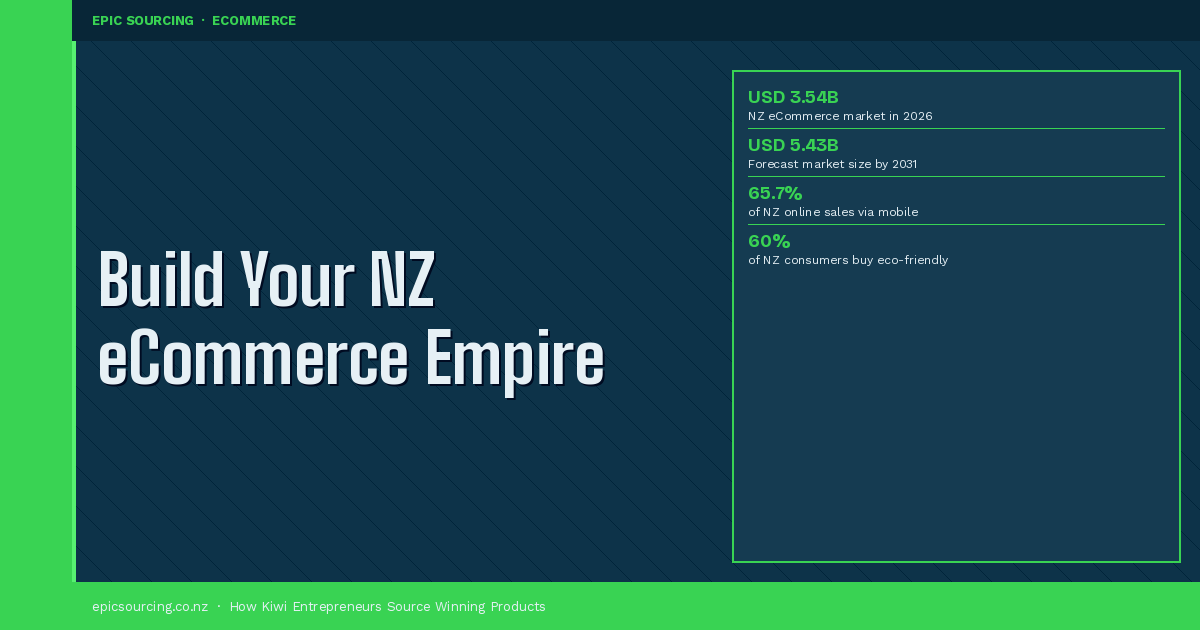
The NZ eCommerce market just crossed USD 3.54 billion in 2026 — and it's forecast to reach USD 5.43 billion by 2031. That's a lot of online shopping happening from a country of five million people. And a significant chunk of what's being sold online is imported product.
If you've ever thought about launching an online store, or scaling the one you've already got, sourcing products from overseas manufacturers is one of the most powerful levers you can pull. Done right, it means better margins, unique products your competitors can't easily copy, and the ability to build a real brand — rather than just reselling the same generic stuff everyone else is selling.
So let's dive into exactly how to build a successful NZ eCommerce business with imported products in 2026 — from picking your product category right through to getting your shipment cleared at the border.
Why 2026 Is a Golden Era for NZ eCommerce Entrepreneurs
A few trends are making 2026 particularly exciting for Kiwi entrepreneurs who import:
- Mobile commerce now generates 65.7% of all NZ online sales — consumers are completely comfortable buying from their phones, which lowers the purchase barrier enormously
- 60% of NZ consumers actively prioritise eco-friendly products — a massive opportunity for anyone sourcing sustainable or ethically manufactured goods
- Home & Garden is the most common eCommerce store category (15.2% of stores), followed by Apparel (13.8%) — also the most popular import categories among Epic's NZ clients
- Food & Beverage shows the strongest growth trajectory at 13.55% CAGR — an emerging opportunity for imported packaged goods and specialty ingredients
AI shopping agents are also transforming how Kiwi consumers discover products. Well-described, well-photographed products with genuine reviews are being surfaced more prominently in AI-powered search results. Get your product right, and discoverability follows naturally.
Choosing the Right Product Category to Import and Sell
This is where most first-timers go wrong — they fall in love with a product before doing the market research. Here's a smarter framework:
- Look for genuine gaps in the NZ market — products Kiwis are already searching for but can't easily buy locally
- Avoid commoditised products with strong local competition — you don't want to be the fifth person selling the same generic yoga mat
- Think about logistics before you commit — heavy, fragile, or oversized items cost more to ship and have higher damage rates
- Consider your MOQ (Minimum Order Quantity) tolerance — can you sit on 500 units while you test the market?
- Align with NZ consumer trends — sustainable packaging, natural materials, outdoor adventure products
Real example: a Kiwi entrepreneur sourced custom-printed reusable produce bags from a certified factory in China, positioned them as an eco-friendly grocery alternative, and launched on Shopify. Small MOQ, solid margins, strong story. That's the sweet spot.
Sourcing Hack #1: Use Alibaba's RFQ tool to compare suppliers fast — Instead of cold-messaging individual factories, post a Request for Quotation (RFQ) on Alibaba. Multiple verified suppliers will respond with quotes, letting you compare pricing, MOQs, and lead times in one place. Filter by Trade Assurance suppliers — it protects your payment if something goes wrong.
How to Find and Vet Overseas Suppliers for Your eCommerce Store
Finding a supplier is easy. Finding a good one takes a bit more work:
- Start with verified supplier platforms — Alibaba (Trade Assurance), Made-in-China.com, or Global Sources
- Check the supplier's trade history — how long in business, completed orders, reviews from English-speaking buyers
- Order samples before any production order — non-negotiable. You need to physically hold the product first
- Video call the supplier — a 20-minute call tells you a lot about communication quality and professionalism
- Use a sourcing agent if you're dealing with multiple suppliers or complex product specs
Navigating NZ Customs, Duties, and Compliance
Goods valued over NZD $1,000 (cost, insurance, and freight) require a Customs Entry through a licensed broker. GST (15%) applies to all imported goods. Import duties vary by product — clothing can attract 10%+, while many goods from China attract 0% under CPTPP and AANZFTA rules with the right documentation.
Biosecurity is the other one to watch. MPI's rules are strict for wooden products, natural fibres, and certain materials. Get your paperwork right before your shipment leaves port — don't guess on this one.
Sourcing Hack #2: Source eco-certified products for a pricing premium in NZ — When requesting quotes, specifically ask about eco-certifications for your product category. GOTS-certified organic cotton activewear commands a 20-40% price premium in the NZ market compared to standard alternatives. Look for GOTS (textiles), FSC (wood), or OEKO-TEX (fabrics) certification — the sourcing cost difference is often minimal, but the retail margin difference is significant.
Mobile-First Thinking: Why Your Products Need to Sell on a Phone Screen
Since 65.7% of NZ eCommerce sales happen on mobile, your product presentation matters as much as the product itself. When selecting products to import, ask:
- How does this product photograph? Clean, visually striking products perform best in mobile listings
- Can I tell a clear story in 3-5 images? Mobile shoppers scroll images more than they read descriptions
- Does the product benefit from a short demo video? If so, can the factory provide one?
When working with your supplier, request high-quality product photos or ask if they offer a factory photo package. Many do — it'll save you the cost of a local photoshoot for your first inventory run.
The Eco-Friendly Edge: Why Sustainable Products Win in NZ
60% of NZ consumers actively prioritise eco-friendly options when making purchasing decisions. That's a powerful market signal. If you can source products with genuine sustainability credentials — recycled materials, certified ethical manufacturing, minimal packaging, natural fibres — you have a meaningful differentiator that commands higher prices and builds stronger brand loyalty.
The key word is 'genuine.' NZ consumers are savvy and will call out greenwashing. If you're going to lean into the eco angle, make sure your supplier can provide verifiable certification and be transparent about your supply chain. The authenticity is the point.
Building a successful NZ eCommerce business with imported products in 2026 is genuinely within reach for any Kiwi entrepreneur who does the work upfront. Pick a smart product, vet your suppliers properly, nail your compliance, and lean into the trends that NZ consumers actually care about.
Ready to take the next step? Book a free consultation with Epic Sourcing New Zealand — no sales pitch, just straight-up advice from people who source for a living. Visit epicsourcing.co.nz to get in touch.
Related Articles


Let’s Make It Epic
We're here to make sourcing simple – and a whole lot less stressful.
We are experiencing a higher volume of enquiries than usual. Our standard reply time for form submissions and emails is within 72 hours.
If your matter is urgent, please schedule a video call using the link below.
