
.svg)
August 2026 Freight Rate Surge: What NZ Importers Need to Know (And Do) Right Now

.svg)
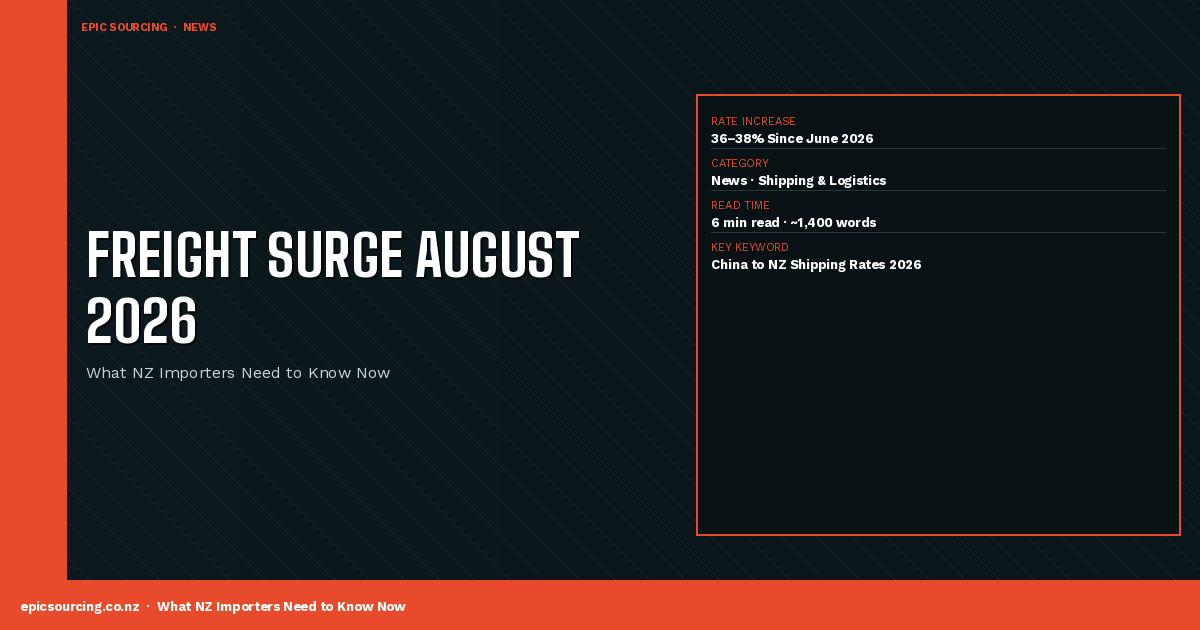
If you've been importing from China recently, you might have noticed your freight quotes looking a bit... chunky. That's not your imagination — sea freight rates from China to New Zealand have surged 36-38% since June 2026, and we're now squarely in peak season territory.
Don't panic. This isn't the sky falling. But it is a good reason to pay close attention — and, if you haven't already, start thinking about how to protect your margins when shipping costs spike like this.
In this post, we'll break down why rates have jumped, what to expect for the rest of Q3, and — most importantly — what Kiwi importers can actually do about it.
Why Have China-to-NZ Freight Rates Spiked in August 2026?
A few things have converged at once to create this freight crunch:
- Peak season capacity crunch — August through October is the busy season for shipping as Northern Hemisphere retailers front-load inventory for Christmas and Q4. This compresses available vessel capacity across Asia-Pacific.
- Elevated e-commerce demand — NZ online spending is up 12% in H1 2026, with mobile shopping now accounting for 65.7% of all NZ e-commerce transactions. That's a lot of pallets and parcels competing for the same cargo space.
- Oceania-specific capacity pressure — The China-to-NZ shipping lanes have seen disproportionate rate increases compared to some other trade lanes. Oceania represents a smaller share of global shipping volume, so when demand spikes, there's less buffer.
Sourcing Hack #1: Plan Around Peak Season — Not During It — Book your shipping at least 6-8 weeks before you need goods at your warehouse. By locking in space early, you can often secure rates before the peak season price spike fully kicks in. Your freight forwarder can advise on the best booking windows for China-to-NZ routes.
What Are the Actual Numbers?
As of August 2026, here's what importers are looking at for sea freight from China to Auckland:
- 20GP container: NZ$2,250-$2,750
- 40GP container: NZ$4,455-$5,445
- Air freight: approximately NZ$4.50/kg (likely higher now at peak)
- Transit time: 20-23 days (sea FCL), 21-27 days (sea LCL), 3-5 days (air)
These are spot rates. If you have an ongoing contract with a freight forwarder, your rates may be locked for a period — but always check for "subject to surcharges" clauses, which can catch importers off guard.
What Types of Products Are Hit Hardest?
Heavy, bulky products feel freight rate surges most acutely. Think outdoor furniture (aluminium garden sets, timber dining tables), building materials (tiles, flooring, fixtures), gym and fitness equipment, home storage and shelving systems, and commercial FF&E for hotels and offices.
Lighter, higher-value products — electronics, activewear, beauty products — are better candidates for air freight. The cost-per-kg is higher, but the freight cost as a percentage of product value stays manageable.
How to Protect Your Margins During a Freight Spike
Here's what smart Kiwi importers are doing right now:
- Consolidate shipments — Instead of ordering frequently in small quantities, consolidate into larger, less frequent shipments to maximise your cost-per-unit on freight.
- Review your LCL vs FCL decision — If you're shipping LCL (less than container load), run the numbers on whether a full container load (FCL) now makes sense. FCL is often better value once your volume reaches 10-12 CBM.
- Renegotiate payment terms — If you can extend credit terms with your supplier, you can ship slightly later while still meeting your end-of-year inventory needs.
- Consider sea-air hybrid — Some importers move goods by sea to Singapore or Hong Kong, then air freight the final leg to NZ, balancing cost and speed.
- Update your landed cost models — If you haven't updated your cost calculations since June, your profit margins may be thinner than you think. Run the numbers before placing your next order.
Sourcing Hack #2: Use a Freight Forwarder, Not Direct Carrier Booking — A good NZ freight forwarder will have negotiated rates with multiple carriers and can often beat what you'd get booking direct. They'll also help navigate peak season surcharges, origin fees, and NZ Customs documentation. If you need a recommendation, drop us a line — we work with freight partners every day.
Will Rates Come Down?
Short answer: probably yes, but not until Q4 or early 2027. Peak season typically runs through to October, after which Chinese factories wind down ahead of Lunar New Year planning and vessel space opens up again. If you can delay non-urgent imports until November or December, you may see more competitive rates.
That said, freight markets are notoriously hard to predict. Geopolitical factors, weather events (there have already been some typhoon disruptions in the South China Sea this year), and unexpected demand surges can all shift rates quickly.
A Word on the NZ-China FTA
Good news for Kiwi importers: despite the US imposing a 12.5% tariff on NZ goods from late July 2026, there are no new tariff changes on NZ imports from China under the NZ-China Free Trade Agreement. Most manufactured goods from China still come in at 0% duty. That's a meaningful advantage — the cost pressure right now is on freight, not tariffs, which means it's a temporary challenge rather than a structural one.
The Bottom Line
Peak season freight spikes are a reality of importing from China — but they're manageable with the right strategy. Consolidate your shipments, plan ahead, work with a good freight forwarder, and update your landed cost calculations before you commit to your next order.
If you're placing a significant import order in the coming months and want to make sure your logistics and costs are dialled in, book a free consultation with the Epic Sourcing team. We work with Kiwi importers every day and can help you navigate peak season without blowing your margins. Head to epicsourcing.co.nz to get started.
Related Articles



Let’s Make It Epic
We're here to make sourcing simple – and a whole lot less stressful.
We are experiencing a higher volume of enquiries than usual. Our standard reply time for form submissions and emails is within 72 hours.
If your matter is urgent, please schedule a video call using the link below.
