.svg)
Sourcing Eco-Friendly Products from China: A Practical Guide for NZ eCommerce Brands

.svg)
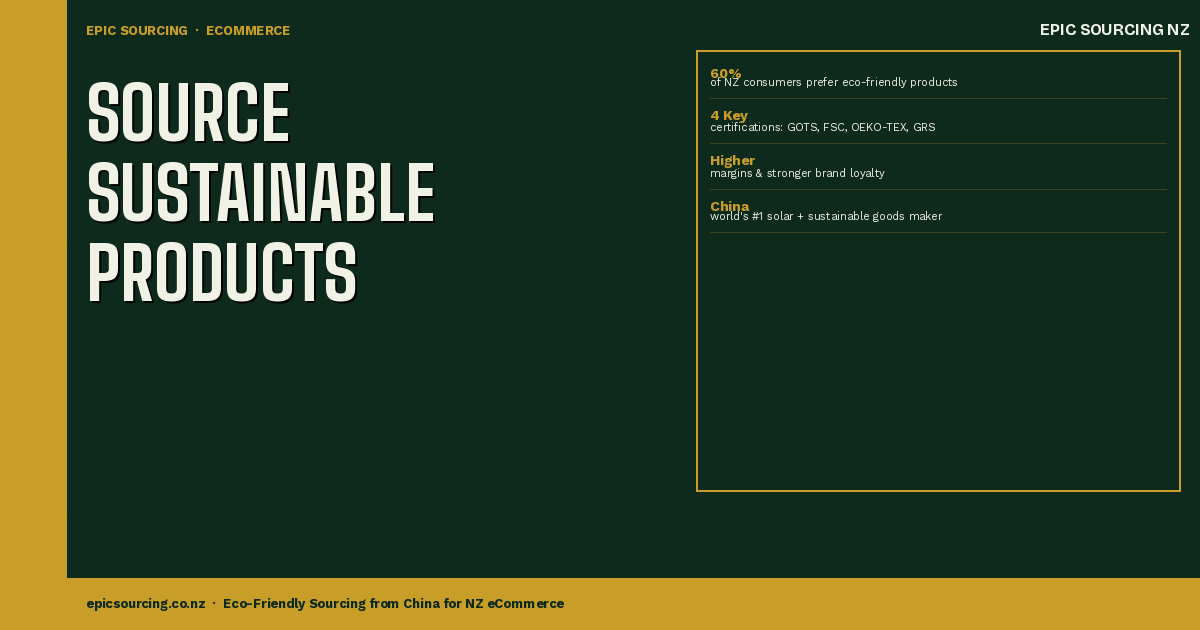
NZ consumers are sending a clear signal: they care about what their products are made from, how they're made, and what happens to them at end of life. Research shows that 60% of NZ consumers now actively prioritise eco-friendly options when making purchasing decisions. That's not a niche. That's the mainstream.
For NZ eCommerce brands, this creates both an opportunity and a responsibility. The opportunity: eco-focused product ranges can command higher margins, stronger brand loyalty, and better word-of-mouth. The responsibility: making genuine claims about sustainability — not just slapping 'eco' on the packaging and hoping no one looks too closely.
So how do you actually source eco-friendly products from China in a way that's credible, commercially viable, and genuinely good for the planet? Here's your practical guide.
First, Let's Define 'Eco-Friendly' — Because It Matters
Eco-friendly means different things in different contexts. For sourcing purposes, it typically covers one or more of the following dimensions:
- Materials: Natural, renewable, recycled, or biodegradable raw materials (bamboo, organic cotton, recycled PET, reclaimed wood)
- Manufacturing process: Low-waste production, renewable energy use, reduced chemical use, water recycling
- Packaging: Minimal, recycled, or compostable packaging rather than virgin plastic
- Durability: Products designed to last longer, reducing the overall consumption cycle
- Certifications: Third-party verified claims like GOTS, FSC, OEKO-TEX, or GRS (recycled content)
The trap that catches many brands is making broad eco claims based on only one of these dimensions while ignoring others. Bamboo fibre clothing, for example, can be heavily chemical-processed during manufacturing — meaning the material is sustainable but the process isn't. Credible eco brands are specific and honest about where their sustainability claims apply.
What Eco-Friendly Products Can You Source from China?
China is actually a significant producer of eco-friendly goods — it's the world's largest manufacturer of solar panels, and has a thriving sustainable materials sector. Here are some strong categories for NZ eCommerce brands:
- Bamboo products: Kitchenware, utensils, homewares, toothbrushes, personal care items, furniture — bamboo grows rapidly without pesticides and is highly renewable
- Recycled material products: Bags made from recycled PET bottles, accessories from upcycled ocean plastic, notebooks from recycled paper
- Organic cotton apparel: T-shirts, activewear basics, baby clothing — look for GOTS-certified cotton suppliers
- Natural fibre homewares: Jute, hemp, linen cushions, rugs and baskets — Vietnam is particularly strong in these
- Eco packaging: Kraft paper, compostable mailers, reusable tote bags — huge opportunity for NZ brands wanting to reduce single-use plastic
- Zero-waste personal care: Shampoo bars, refillable containers, bamboo accessories
Sourcing Hack #1: Request Certification Documentation Before the Sample Stage — It's easy for a factory to describe their products as 'eco-friendly' in a catalogue. It's much harder to fake a GOTS, FSC, OEKO-TEX, or GRS certificate. Before you invest in samples, ask for current certificates and verify them directly on the certifying body's website. This single step separates genuine eco producers from greenwashers.
Navigating Greenwashing: How to Tell the Real Deal from the Marketing
Greenwashing — making misleading environmental claims — is rife in manufacturing markets. Here's how to protect your brand from getting caught out:
- Ask for specific certifications — not just 'we use sustainable materials' but the actual certificate name, number, and expiry date
- Verify certificates independently — every major certification body has an online search tool
- Request factory audit reports — BSCI or SMETA social audits give you insight into environmental and labour practices
- Ask about their wastewater and chemical management — a factory that can't answer this hasn't thought about it
- Request material composition reports for textile products — you want to know what percentage is actually recycled/organic/natural
The NZ Commerce Commission has been increasingly active on greenwashing claims. Your brand reputation is worth protecting.
The Cost Reality: Is Eco More Expensive?
Honest answer: often yes, but not always by as much as you'd expect. Here's a rough guide:
- Organic cotton vs conventional: Typically 15–30% premium at factory level
- Bamboo products: Often comparable to or slightly above equivalent plastic/timber alternatives
- Recycled PET products: Comparable to virgin PET, sometimes cheaper depending on oil prices
- FSC-certified timber: 10–25% premium over non-certified timber
- Compostable packaging: Still carries a meaningful premium over conventional plastic
The key insight: NZ consumers are willing to pay a premium for genuinely eco-friendly products — typically 10–25% more than equivalent conventional options. If your sourcing cost premium is 15–30% but your retail price premium is 20–40%, the economics work.
Sourcing Hack #2: Use Vietnam as Your Natural Fibre Sourcing Hub — Vietnam has exceptional capability in natural fibre products — particularly jute, bamboo, rattan, linen, and hand-woven textiles. Vietnamese factories in this space are often smaller, more artisan in character, and more open to working on genuinely sustainable supply chains. If your eco brand story involves natural materials and craftsmanship, Vietnam is worth a serious look.
Building Eco Credentials Into Your Brand Story
Once you've done the sourcing work properly — verified certifications, vetted factories, built a genuinely sustainable product range — the next step is communicating it authentically. Some things that work well:
- Specific, verifiable claims: 'Made from 100% GOTS-certified organic cotton' beats 'made with natural fibres'
- Factory transparency: Sharing factory profiles, photos, and audit results builds trust
- Honest tradeoffs: Acknowledging where you're still improving is more credible than overclaiming
- NZ-relevant context: Connecting eco claims to NZ values — waterways, biodiversity, kaitiakitanga — resonates with local audiences
The eCommerce Opportunity in 2026
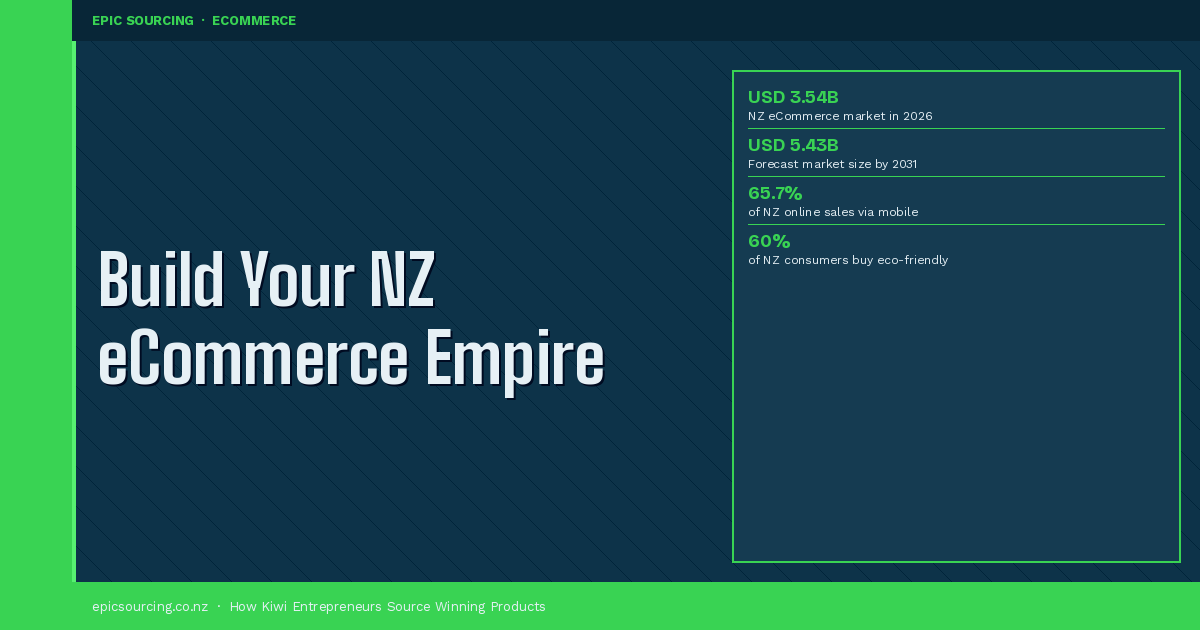
NZ's eCommerce market is worth USD 3.54 billion in 2026, projected to reach USD 5.43 billion by 2031. Within that, the Home and Garden category leads in store count, and Apparel is close behind — both are sectors with strong eco-friendly product opportunities. With 65.7% of NZ online sales happening via mobile commerce, your product images, descriptions, and sustainability credentials need to be compelling at thumb-scrolling speed.
Brands that get eco sourcing right in 2026 are positioning themselves ahead of regulatory and consumer trends that will only accelerate. The NZ government's sustainability commitments, growing consumer scrutiny, and the rise of AI shopping agents that can filter for eco credentials all point in the same direction.
If you're building an eco-focused product range for your NZ eCommerce brand and need help finding verified, genuinely sustainable suppliers — Epic Sourcing can help. We know the factories, we know the certifications, and we know how to tell the real thing from the greenwash. Book your free consultation at epicsourcing.co.nz.
Related Articles



Let’s Make It Epic
We're here to make sourcing simple – and a whole lot less stressful.
We are experiencing a higher volume of enquiries than usual. Our standard reply time for form submissions and emails is within 72 hours.
If your matter is urgent, please schedule a video call using the link below.
