.svg)
![How to Import Gym Equipment from China to New Zealand [2026 Guide]](https://cdn.prod.website-files.com/688a8969df3fa58c211fb141/69a4bc6994dd6b0ce2c1439b_Import%20Directly%20from%20China.png)
How to Import Gym Equipment from China to New Zealand [2026 Guide]
.jpg)
.svg)
Why NZ Gym Owners and Retailers Import Direct from China
Walk into any well-equipped commercial gym in New Zealand and there is a good chance a significant portion of the equipment came from China. The country is the world's dominant manufacturer of fitness equipment, from entry-level cardio machines to high-specification strength equipment used in professional training facilities.
For NZ gym owners, fitness retailers, and private label brands, importing direct from Chinese manufacturers offers access to a much wider product range at substantially lower prices than buying through local distributors. The trade-off is that you take on more of the logistics, compliance, and quality control work yourself — or you work with a sourcing partner who handles it for you.
This guide covers the full process: finding and vetting suppliers, understanding the compliance requirements for gym equipment entering New Zealand, working out your true landed cost, and avoiding the mistakes that catch first-time importers out.
Step 1: Define Your Equipment Requirements Before You Talk to Any Supplier
The single most common mistake first-time gym equipment importers make is approaching suppliers before they have a clear, specific brief. Chinese manufacturers produce gym equipment across an enormous range of specifications, price points, and quality tiers. Without a detailed requirement document, you cannot get comparable quotes, and you cannot assess whether what arrives matches what you ordered.
Before contacting any supplier, document the following for each product you intend to import: the product type and category, specific dimensions and weight ratings, frame materials and finish specifications, upholstery materials and colours if applicable, weight stack or plate specifications for strength equipment, electrical specifications for cardio equipment including voltage and compliance markings required for NZ, any branding or private label requirements, and your target MOQ and budget per unit.
For commercial gym equipment, also specify the intended use environment. Equipment rated for home use is typically built to lower duty cycle and load specifications than commercial-grade equipment. Misrepresenting the intended use category to reduce costs is a risk both for safety and for warranty and liability purposes.
The HS code for fitness equipment imported into New Zealand is 9506.91, which covers exercise, gymnastics, and athletics equipment. Having this ready speeds up customs documentation and helps your freight forwarder classify your goods correctly from the start.
Step 2: Finding and Vetting Chinese Gym Equipment Suppliers
China's gym equipment manufacturing is concentrated in a handful of regions. Xiamen, Guangzhou, and Hebei province are the main hubs for strength and functional fitness equipment. Shandong and Jiangsu have significant cardio equipment manufacturing. Understanding the regional concentration helps when searching on trade platforms and when arranging factory visits or audits.
Alibaba and Global Sources are the primary discovery platforms, but finding a supplier listing is only the start. The fitness equipment category on these platforms ranges from genuine, export-experienced manufacturers to trading companies reselling equipment from multiple factories with no quality control of their own.
When evaluating potential suppliers, look beyond the platform profile. Request their business licence and verify that the registered business scope includes fitness or sports equipment manufacturing. Ask for export documentation from previous orders to markets comparable to New Zealand. Ask specifically about experience exporting to Australia or the UK, as compliance requirements are similar. Request references from existing buyers you can contact.
For any supplier you are seriously considering, a factory audit is strongly recommended before placing a first production order. Commercial gym equipment carries real safety implications. A supplier who is reluctant to allow an independent audit, or who cannot produce certifications relevant to your product category, is not a supplier whose equipment you want in a commercial facility where members are loading heavy weights or running at speed.
Epic Sourcing maintains relationships with verified gym equipment manufacturers in China and can facilitate factory audits and supplier verification reports for NZ clients evaluating new supply relationships.
Step 3: Quality Standards and Certifications for Gym Equipment
Gym equipment imported into New Zealand must meet applicable product safety standards. The specific standards depend on the product type, but the key frameworks to understand are as follows.
For strength equipment, the relevant international standard is EN 957, which covers stationary training equipment including weight training equipment and strength training equipment. While EN 957 is a European standard, it is widely referenced by NZ importers and retailers as a benchmark for commercial-grade equipment. Ask your supplier whether their products are tested and certified to EN 957 or equivalent.
For cardio equipment including treadmills, bikes, and ellipticals, EN 957-5 and EN 957-6 apply to specific equipment types. Electrically powered cardio equipment must also comply with NZ electrical safety requirements and carry appropriate compliance markings for the NZ market.
For functional fitness equipment such as barbells, bumper plates, and racks, there is no single mandatory standard in New Zealand, but load ratings, welds, and materials should be verifiable. Cheap barbells and racks that fail under load are a genuine safety hazard in a commercial setting.
Request test reports from the supplier, not just certificate claims. Certificates should be issued by recognised third-party testing bodies. Verify that certificates are current and that the tested product specification matches what you are ordering. A certificate for a similar but not identical product is not adequate assurance.
Step 4: MPI Biosecurity Requirements for Gym Equipment
Most gym equipment is metal, upholstered, or plastic, and does not trigger biosecurity concerns at the NZ border. However, there are two specific scenarios worth being aware of.
Wooden components are the main biosecurity consideration. Equipment with solid timber elements, such as wooden plyometric boxes, wooden kettlebell handles, or timber flooring supplied with equipment orders, is subject to MPI wood import requirements. Wooden packaging used to ship the equipment, such as timber pallets or crating, must comply with ISPM 15, the international standard for heat-treating or fumigating wood packaging to eliminate pest risk. Non-compliant wooden packaging will be treated at the border at your cost, or refused entry.
If you are ordering rubber flooring, yoga or gymnastics mats, or foam-based products alongside equipment, check whether any of these materials are subject to MPI Import Health Standards. Some rubber and foam products require documentation confirming they are free of restricted substances or have been processed in ways that eliminate biosecurity risk.
The safest approach is to confirm biosecurity requirements with your freight forwarder or customs broker before the order ships, rather than discovering a compliance gap at the Auckland or Tauranga border.
Step 5: Shipping Gym Equipment from China to New Zealand
Gym equipment is heavy, bulky, and often awkwardly shaped. Shipping costs are a significant component of your landed cost and deserve careful attention at the planning stage.
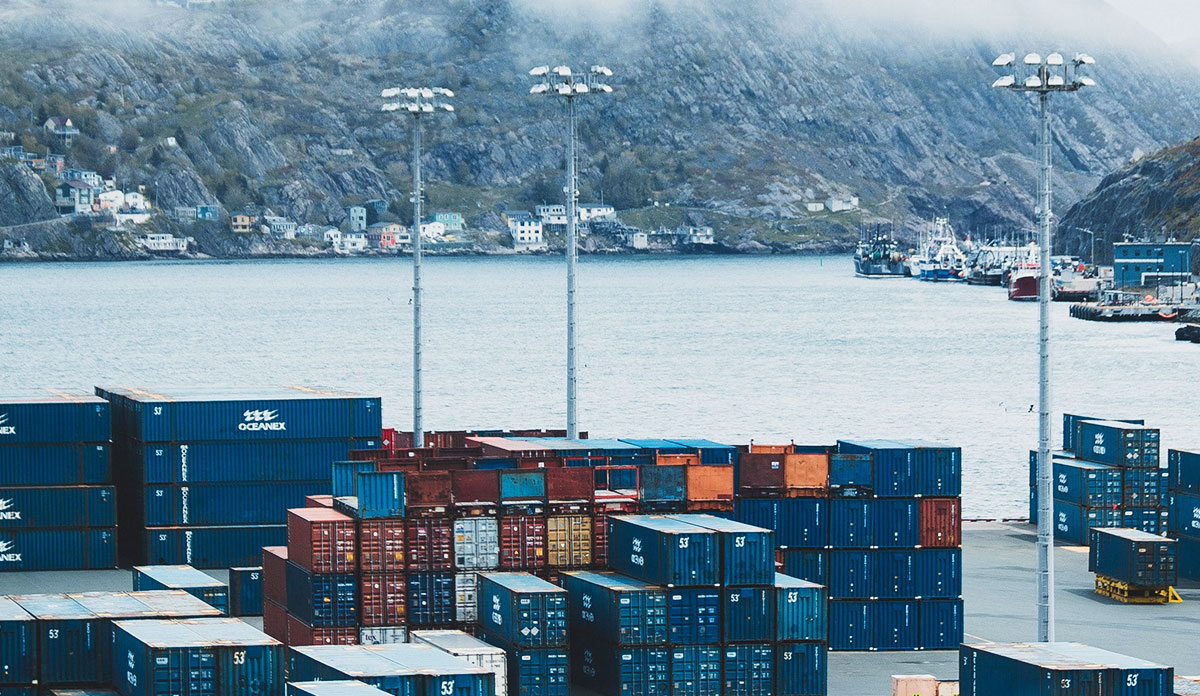
For most commercial gym equipment orders, sea freight in a full container load (FCL) or less than container load (LCL) is the appropriate mode. Air freight is rarely viable for gym equipment given the weight and dimensions involved. A single commercial treadmill can weigh 150kg or more. A full gym fit-out will fill a 20-foot or 40-foot container.
FOB (Free On Board) and EXW (Ex Works) are the most common Incoterms used for gym equipment imports from China. Under FOB, the supplier takes responsibility for getting goods to the Chinese port and loaded onto the vessel. Under EXW, responsibility transfers to you as soon as goods leave the factory. For most NZ importers, FOB is preferable as it places more of the local Chinese logistics in the supplier's hands.
Key shipping considerations for gym equipment include accurate carton dimensions and gross weights for freight booking, which are often underestimated for heavy equipment. Carton construction must be adequate for the weight of contents, as undersized cartons that collapse during transit are a common cause of damage claims. Equipment with sharp edges or protrusions needs adequate internal packaging to prevent damage to adjacent cartons or to the equipment itself.
Typical sea freight transit time from major Chinese ports to Auckland is 18 to 25 days depending on the specific port of loading and the shipping line's schedule. Factor in port processing, customs clearance, and local delivery when planning your inventory timeline.
Step 6: Duties, GST, and Landed Cost Calculation
Understanding your true landed cost before you commit to an order is essential for making sound commercial decisions. The purchase price from a Chinese supplier is only the starting point.
Import duties on gym equipment entering New Zealand are generally low or zero under the current tariff schedule, as New Zealand has a relatively open trade policy and most fitness equipment falls under categories with minimal duty rates. However, confirm the applicable rate for your specific HS code with NZ Customs or your customs broker, as rates can vary by product subtype.
GST at 15% applies to the customs value of imported goods including the cost of goods, international freight, and insurance. This is payable at the border and is recoverable as an input tax credit if your business is GST registered. Budget for this as part of your cash flow planning even if it is recoverable.
A realistic landed cost calculation for gym equipment imports should include the supplier FOB price, international sea freight, marine cargo insurance, NZ port charges and terminal handling fees, customs broker fees, NZ Customs entry costs, GST, and local delivery from the port to your warehouse or facility. For first-time importers, the total landed cost typically runs 25 to 40 percent above the FOB price depending on order size and freight rates.
Step 7: Private Label and Custom Branding Options
Many NZ gym businesses and fitness retailers import gym equipment under their own brand rather than selling Chinese manufacturer brands. Chinese gym equipment manufacturers are generally very accommodating of private label requirements, particularly for buyers placing container-load quantities.
Common customisation options include laser-etched or embossed logos on barbells and plates, custom upholstery colours and branded stitching on benches and cable machines, custom frame powder coat colours, branded instructional decals on cardio equipment, and custom packaging with your brand identity.
Private label gym equipment requires more lead time than standard catalogue orders, as tooling changes, sampling, and approval rounds add time to the production process. Budget for a longer production lead time and ensure you approve a production sample before committing to the full order run. Colour accuracy in particular can vary between the sample and production if not carefully managed.
Common Mistakes NZ Gym Equipment Importers Make
Based on our experience working with NZ clients in the fitness category, the following mistakes come up repeatedly and are worth knowing before you start.
Ordering on price alone is the most common error. Chinese gym equipment ranges from genuinely commercial-grade product built to handle years of heavy use to entry-level product that looks similar but will not hold up in a commercial environment. The price difference reflects real differences in materials, welds, component quality, and tolerances. In a commercial gym setting, equipment failure is a safety and liability issue, not just an inconvenience.
Skipping the sample approval process is another frequent mistake. Order a sample of every product before committing to a full container. Test it thoroughly. Load the barbell to its rated capacity. Run the treadmill for extended periods. Check every weld and every adjustment mechanism. Problems found at the sample stage cost a few hundred dollars to resolve. The same problems found after 200 units arrive in Auckland are significantly more expensive.
Underestimating freight costs on large, heavy equipment catches first-time importers out regularly. Get freight quotes before finalising your order, not after, and use accurate dimensions and weights.
Finally, failing to confirm electrical compliance for powered equipment before it ships causes real problems at the NZ border and with electricians during installation. Confirm that cardio equipment is configured for NZ voltage and carries the required compliance documentation before goods leave China.
How Epic Sourcing Can Help
Epic Sourcing works with NZ gym owners, fitness retailers, and private label brands importing equipment from China. Our service covers supplier identification and verification, factory audits, sample coordination and approval, pre-shipment inspections, and end-to-end logistics coordination.
Our pricing is transparent and hourly-rate based, with no commission on orders. That means we are incentivised to find you the right supplier at the right price, not to maximise the order value.
If you are planning a gym equipment import and would like to talk through the process, get in touch with our team. We can help you move from brief to container with confidence.
Related Articles
Let’s Make It Epic
We're here to make sourcing simple – and a whole lot less stressful.
We are experiencing a higher volume of enquiries than usual. Our standard reply time for form submissions and emails is within 72 hours.
If your matter is urgent, please schedule a video call using the link below.
