
.svg)
New Zealand Biosecurity Requirements: The Complete Importer's Guide (2026)
.jpg)
.svg)
Why New Zealand's Biosecurity Rules Are So Strict
New Zealand is geographically isolated, which means our ecosystems have evolved without many of the pests and diseases that are common elsewhere. That isolation is also one of our biggest economic advantages — our clean, green reputation underpins everything from tourism to our $50+ billion primary sector export industry.
The Ministry for Primary Industries (MPI) is responsible for managing biosecurity risk at the border. Under the Biosecurity Act 1993, MPI has broad powers to inspect, treat, hold, or destroy goods that pose a risk. Importers who don't understand these rules — or who try to cut corners — face delays, destruction of goods, and in some cases, significant fines.
The bottom line: New Zealand's biosecurity requirements aren't red tape for the sake of it. They exist to protect the country, and the consequences of getting them wrong are real.
Which Imported Products Are Considered High-Risk?
Biosecurity risk is primarily associated with goods that can harbour pests, soil, plant matter, or animal products. The following categories are the most commonly flagged for Kiwi importers sourcing from Asia:
Wood and Timber Products
This is where we see the most issues for Kiwi importers. Raw or semi-processed timber, wooden furniture, wooden pallets, and products with wooden components can all carry bark beetles, wood borers, and other pests. Goods must typically be heat-treated to ISPM 15 standard (for packaging and pallets) or meet specific treatment requirements for the product itself.
Textiles and Clothing
Natural fibre products — cotton, wool, silk, linen — can carry plant pests or residual soil contamination. While many textile shipments clear without issue, goods with soil staining, seeds, or plant debris attached are high-risk.
Outdoor and Garden Products
Garden furniture, tools, planters, and outdoor equipment that has been used or stored outdoors is particularly risky. Any item with soil residue must be cleaned before export. New, unused items in sealed packaging are lower risk but still subject to inspection.
Gym Equipment and Sports Goods
Gym equipment with rubber or natural material components, especially items with wood or plant-based padding, can be flagged. Metal equipment is generally lower risk but should still be clean and free from packing materials that could harbour pests.
Building Materials
Stone, clay, concrete products, and especially any materials containing natural fibres or wood components are high scrutiny items. Prefabricated building kits from China — including granny flat and tiny home kits — require careful documentation and treatment certification before shipping.
What Happens When Your Goods Arrive at the NZ Border?
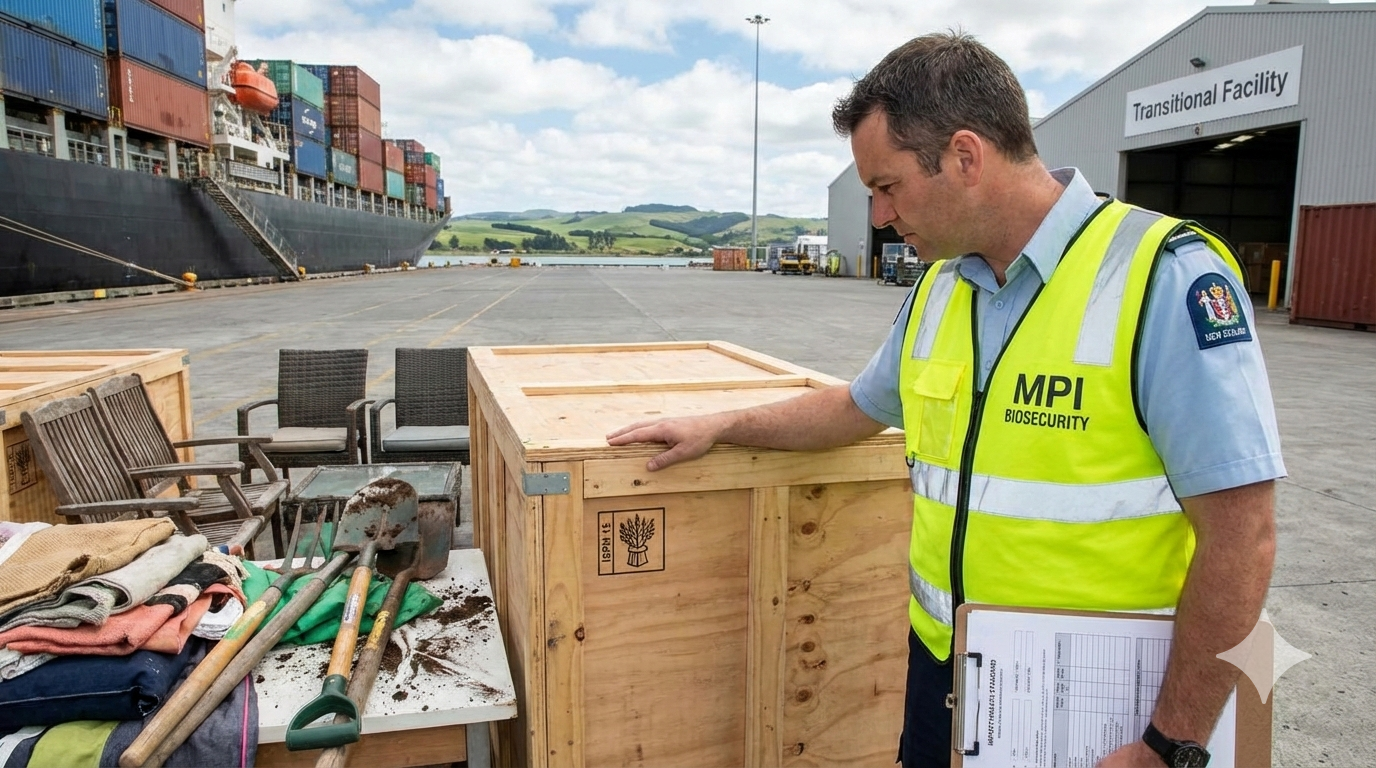
When your shipment arrives, it enters what MPI calls the "transitional facility" — essentially, the border zone where imported goods are held until they are cleared, treated, or re-exported. Every port and airport in New Zealand has transitional facilities.
MPI can take several actions with your goods:
- Clear the goods for immediate release if no risk is identified
- Direct the goods to an Approved Transitional Facility (ATF) for inspection or treatment
- Require treatment on-site (e.g. fumigation, heat treatment)
- Destroy goods if the biosecurity risk cannot be managed
- Direct goods to be re-exported at the importer's cost
The costs of holding, treatment, and storage are the importer's responsibility. This is why understanding the requirements before you ship is so much more cost-effective than dealing with problems at the border.
What Is an Approved Transitional Facility (ATF)?
An Approved Transitional Facility (ATF) is a premises approved by MPI to receive, store, and treat imported goods that need biosecurity clearance. ATFs play a critical role in New Zealand's import process, particularly for high-risk goods.
ATFs come in several types, including container examination stations, fumigation facilities, heat treatment and cleaning facilities, cold treatment facilities, and secure holding yards.
If your goods are directed to an ATF, they will stay there until MPI is satisfied the biosecurity risk has been managed. ATFs are operated by private businesses approved by MPI, and your freight forwarder or customs broker will typically manage this process on your behalf. The key point is this: going to an ATF costs time and money, so the better your pre-export compliance, the less likely your goods are to be held.
Import Health Standards (IHS): What You Need to Check
MPI publishes Import Health Standards (IHS) for specific product categories. An IHS sets out exactly what conditions must be met for goods to be imported — things like treatment requirements, documentation, and inspection protocols. Before you place an order with your supplier, you should check whether an IHS applies to your product.
You can search for applicable IHS documents on the MPI website at mpi.govt.nz/import. If an IHS applies, it's not optional — your goods must comply, or they won't be cleared.
Common treatment requirements include ISPM 15 heat treatment for wooden packaging, fumigation for certain plant-based materials, and cleaning and drying for used goods. These treatments need to happen before the goods are loaded — not after they arrive in New Zealand.
ISPM 15: The Standard Your Wooden Packaging Must Meet
ISPM 15 (International Standards for Phytosanitary Measures No. 15) is a globally recognised standard for treating wooden packaging materials used in international trade — things like pallets, crates, and wooden boxes. If your goods are packed on or in wooden packaging, that packaging must meet ISPM 15 requirements.
Compliant wooden packaging must be:
- Heat-treated (HT) to a core temperature of 56°C for 30 continuous minutes, or
- Treated with methyl bromide (MB) fumigation (though this is being phased out in many countries), or
- Dielectric heating treated (DH)
Compliant packaging must be marked with the ISPM 15 stamp — a wheat sheaf symbol with a country code, producer code, and treatment abbreviation. When you're working with suppliers in China or Vietnam, make sure you specify ISPM 15-compliant packaging in your purchase order. This is a simple requirement that suppliers are familiar with, and failing to include it is one of the most avoidable biosecurity hold-ups we see.
Common Biosecurity Mistakes NZ Importers Make (And How to Avoid Them)
1. Not checking Import Health Standards before ordering
Many importers only discover a relevant IHS exists after the goods have already shipped. By then, it's too late to arrange compliant treatment at the source. Always check mpi.govt.nz before confirming your order.
2. Assuming the supplier knows NZ requirements
Even experienced Chinese or Vietnamese manufacturers may not be familiar with NZ-specific biosecurity requirements. It's your responsibility as the importer to communicate the requirements clearly — in writing, in the purchase order, and with confirmation from the supplier that they can comply.
3. Using uncertified wooden packaging
This is the most common and most avoidable issue. Specifying ISPM 15-compliant pallets and packaging in your purchase order adds minimal cost at the factory but can save significant delays and treatment fees at the NZ border.
4. Not working with an experienced customs broker
A good customs broker who knows the NZ biosecurity landscape is invaluable. They will identify potential issues with your import documentation, lodge the correct declarations, and manage any ATF process on your behalf. This isn't an area to try to DIY.
5. Forgetting that used goods face higher scrutiny
If you're importing second-hand goods — used machinery, refurbished equipment, vintage items — the biosecurity bar is significantly higher. MPI will want to see evidence that goods have been thoroughly cleaned and treated. Used goods with soil, organic material, or pest evidence will be detained or destroyed.
How to Build Biosecurity Compliance Into Your Supply Chain
The most effective approach is to treat biosecurity compliance as part of your procurement process, not an afterthought. Here's how we approach it with our clients at Epic Sourcing:
- Check MPI requirements before placing your order. Search for your product category on mpi.govt.nz and identify any applicable Import Health Standards.
- Include compliance specifications in your purchase order. Spell out packaging requirements (ISPM 15), treatment requirements, and documentation needs — clearly and in writing.
- Request treatment certificates and documentation. Ask your supplier for the relevant certificates before goods are loaded. For heat-treated timber, you'll want a phytosanitary certificate issued by the exporting country's national plant protection organisation.
- Work with a knowledgeable freight forwarder and customs broker. They will ensure the right import declarations are lodged and advise on any documentation gaps before your goods arrive.
- Factor in potential ATF costs. For high-risk goods, budget for the possibility of ATF holding and treatment fees. Knowing this upfront means you won't be caught off-guard.
Need Help Navigating NZ Biosecurity Requirements?
Biosecurity compliance is one of the areas where having an experienced sourcing partner makes a genuine difference. At Epic Sourcing, we work closely with our clients to identify and manage biosecurity risk before goods leave the factory — not after they arrive at the border.
We communicate compliance requirements to your suppliers in Mandarin or Vietnamese, verify that treatment and packaging standards have been met, and work alongside your customs broker to ensure your documentation is in order. It's the kind of detail that keeps your supply chain moving.
If you have a specific product in mind and you're not sure about the biosecurity requirements, get in touch with our team. We're based in Auckland and we know the NZ border process well — we're happy to help you work it out before you commit to an order.
Related Articles


Let’s Make It Epic
We're here to make sourcing simple – and a whole lot less stressful.
We are experiencing a higher volume of enquiries than usual. Our standard reply time for form submissions and emails is within 72 hours.
If your matter is urgent, please schedule a video call using the link below.
