.svg)
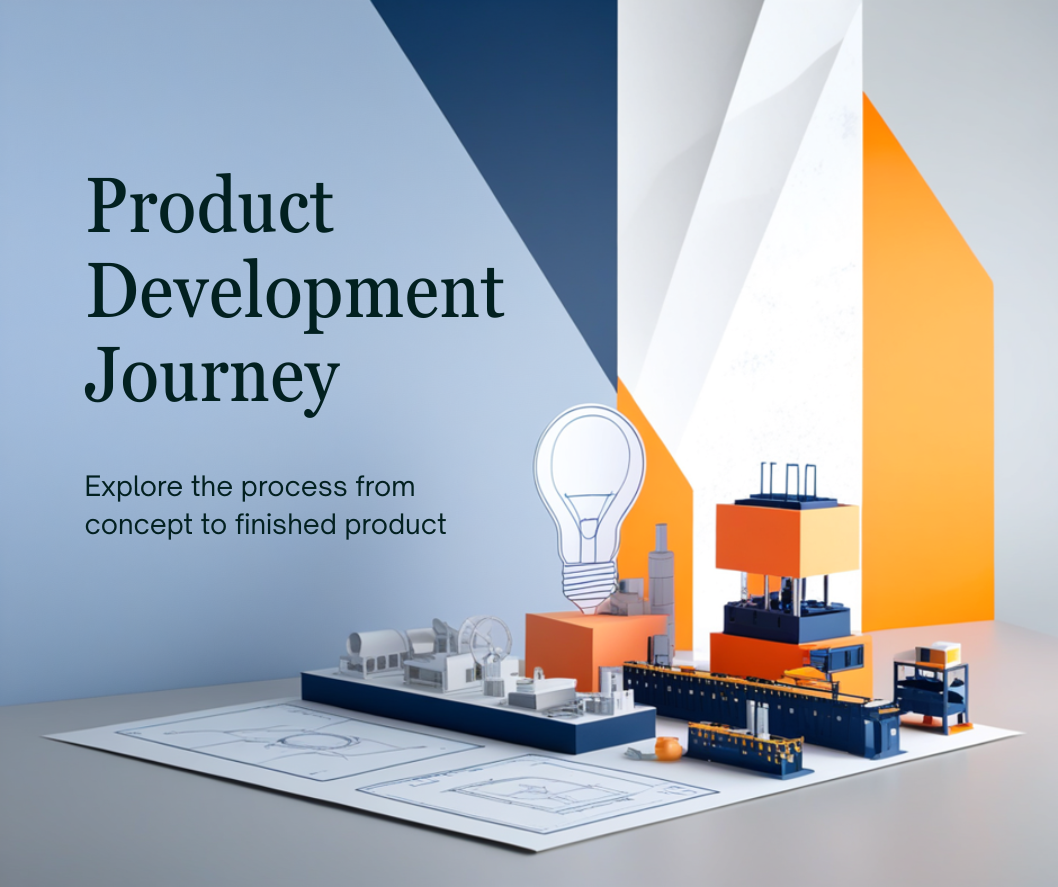
From Sketch to Sample: How Product Design Services in China Work
.jpg)
.svg)
The Gap Between an Idea and a Manufacturable Product
You have a product idea. Maybe it is a consumer gadget, a piece of equipment, a kitchenware item, or a piece of apparel with a design twist. You can see it clearly in your head. You might even have a rough sketch or a 3D model you put together in a consumer app. What you do not yet have is a manufacturable specification that a Chinese factory can actually build from.
This gap between concept and production-ready product is where most first-time inventors and product developers get stuck. It is also the stage where working with the right design and sourcing support makes the biggest difference to both the outcome and the cost.
China has extraordinary depth in product development and manufacturing capability. Industrial designers, tooling engineers, prototyping facilities, and specialist manufacturers are concentrated in clusters that have evolved over decades to support exactly this kind of product development work. For NZ inventors and startups, accessing this ecosystem through the right channels can take a product from sketch to approved sample faster and at lower cost than almost anywhere else in the world.
This guide explains how the process works, what each stage involves, and what to prepare before you engage any design or manufacturing partner in China.
Understanding the Development Stages
Product development from concept to production-ready sample typically moves through five distinct stages. Understanding what each stage delivers helps you plan your timeline, budget, and expectations correctly.
The first stage is concept definition, where your idea is translated into a documented product brief that a designer or engineer can work from. The second is industrial design, where the visual form, ergonomics, and user experience of the product are developed and refined. The third is engineering and technical specification, where the industrial design is converted into precise manufacturing drawings and material specifications. The fourth is prototyping, where one or more physical samples are built to test form, fit, and function. The fifth is tooling and pre-production sampling, where any required tooling or moulds are made and the first production-quality samples are produced.
Not every product requires all five stages in full. A simple product with an existing form factor might move quickly from brief to sample. A complex multi-component product with custom tooling will require careful attention at every stage. Understanding which stages apply to your product is part of the initial scoping conversation with any competent design or sourcing partner.
Stage 1: Getting Your Concept Brief Right
Before any designer, engineer, or manufacturer can help you, you need to articulate what you want to create in enough detail that they can understand it. A concept brief is not a patent application or a business plan. It is a practical working document that covers what the product does, who it is for, what materials or components are involved, any critical dimensions or constraints, and your target cost and volume.
For physical products, supporting your brief with reference images, rough sketches, or annotated photographs of similar existing products is enormously helpful. You do not need to be an artist. A smartphone photo of a napkin sketch with written annotations is sufficient to start a productive conversation with an industrial designer or prototyping firm.
If you have already developed a CAD model or 3D rendering, include it. If you have identified specific features or functions that are non-negotiable versus those that are flexible, document this clearly. The more specific your brief, the less time and money is spent on misaligned design iterations.
Stage 2: Industrial Design
Industrial design is the discipline that shapes the physical form, aesthetics, and user experience of a product. An industrial designer takes your concept brief and develops it into a refined visual and functional design that balances your creative intent with the practical constraints of manufacturing.
For products where appearance and user interaction matter significantly, such as consumer goods, handheld tools, packaging, or wearables, investing in professional industrial design before engineering work begins pays dividends in the final product. A design that looks right but cannot be manufactured efficiently, or that has ergonomic problems not apparent in 2D sketches, is expensive to correct once tooling has been committed.
Industrial designers in China who work with international clients typically deliver concept sketches in two to three rounds, followed by a refined 3D CAD model that can be handed off to engineering. Costs for industrial design services in China range from approximately USD $1,500 to $8,000 depending on product complexity and the scope of design work required. This is substantially lower than equivalent services in New Zealand or Australia.
For simpler products where the form is already well-defined and the development challenge is primarily engineering and manufacturing, industrial design can be condensed or skipped. A sourcing or development partner can advise on whether a dedicated design phase is warranted for your specific product.
Stage 3: Engineering and Technical Specification
Engineering converts your approved industrial design into the precise documentation that manufacturers need to build the product. This includes 2D manufacturing drawings with tolerances and material specifications, 3D CAD files in formats compatible with the manufacturing processes required, a bill of materials listing every component, material, and subassembly, and a product specification document that defines the functional requirements and test criteria the finished product must meet.
For products with electronic components, the engineering scope expands to include PCB design, firmware requirements, and compliance documentation for electrical safety. For products requiring plastic injection moulding, engineering must account for draft angles, wall thickness, and other moulding constraints. For metal products, manufacturing method choices (casting, machining, stamping, forging) each require different engineering approaches.
Well-prepared engineering documentation is the difference between a factory that can produce your product consistently to specification and one that produces something close but not quite right. Factories in China do not do engineering design work as part of standard production. They manufacture to the documentation provided. If that documentation is incomplete or ambiguous, the factory will make interpretations that may or may not align with what you intended.
Stage 4: Prototyping
A prototype is a physical realisation of your design that allows you to test form, fit, and function before committing to tooling and production costs. For most products, at least one prototype round is essential before tooling investment is made.
China has an exceptionally developed prototyping ecosystem, particularly in the Shenzhen and Pearl River Delta region, which is the global hub for rapid hardware prototyping. Services available include 3D printing in a wide range of materials and finishes, CNC machining in metals and plastics, vacuum casting for small runs of polyurethane parts, soft tooling for short-run injection moulded samples, and hand-fabricated samples for apparel and soft goods.
Prototype costs vary widely depending on the product type, materials, and quantity. A simple 3D-printed consumer product prototype might cost USD $200 to $500. A multi-component product requiring CNC machined parts and assembly might run USD $2,000 to $10,000 for a functional sample. Hard tooling for injection moulded parts, which is required for production rather than prototyping, is a separate and larger investment.
Multiple prototype iterations are normal. The first prototype reveals problems you could not anticipate from drawings or renderings. The second iteration addresses those issues. By the third iteration, most products are close to final specification. Building the cost and time for two to three prototype rounds into your development plan is realistic planning, not pessimism.
Stage 5: Tooling and Pre-Production Sampling
For products that require injection moulded plastic components, die-cast metal parts, or custom-formed elements, tooling is the investment that bridges the gap between prototype and production. Moulds and dies are the physical tools that factories use to produce parts at volume. They are typically made from hardened steel and are designed to produce thousands or hundreds of thousands of parts over their working life.
Tooling costs are one of the most significant upfront investments in physical product development. A simple single-cavity plastic injection mould might cost USD $3,000 to $8,000. A complex multi-cavity mould for a precision component could be USD $15,000 to $50,000 or more. These costs are incurred once and are then amortised across the production run. Understanding this cost structure is important for financial planning before you commit to a product development path that requires significant custom tooling.
Once tooling is complete, the factory produces a first article sample or T1 sample, which is the first production-quality part made from the actual tooling. This is the critical approval gate before full production is authorised. T1 samples are checked against engineering drawings and specifications for dimensional accuracy, surface finish, and functional performance. Any issues found at T1 must be resolved before production proceeds, as changes to tooling after this point generate rework costs.
Finding the Right Development Partner in China
For NZ inventors and product startups, the practical challenge is identifying who to work with in China across these development stages. The options range from full-service product development firms that handle design through to production, to specialist prototyping houses, to manufacturers who offer development support as part of their customer acquisition process.
Full-service development firms, sometimes called ODM or design-to-manufacture partners, are the most convenient option for complex products where you need continuity from design through to production. The risk is that their design capabilities and manufacturing capabilities may not be equally strong, and some firms have a bias towards manufacturing methods or components that suit their own production capacity rather than what is optimal for your product.
Working with a sourcing agent who has established relationships across design, prototyping, tooling, and manufacturing partners gives you more flexibility to work with the best specialists at each stage, rather than being constrained to a single firm's capabilities.
In either case, intellectual property protection deserves serious attention before you share detailed product information with any party in China. Register your design with the New Zealand Intellectual Property Office before beginning overseas development work. Consider filing in China through the Patent Cooperation Treaty if your product is innovative enough to warrant it. Use non-disclosure agreements, even though enforcement in China is imperfect, as they establish a paper trail of the confidentiality expectation and deter opportunistic copying by smaller operators.
Realistic Timelines for Product Development
One of the most common sources of frustration in product development is underestimating how long the process takes. For a product requiring industrial design, engineering, and custom tooling, a realistic timeline from initial brief to approved production sample is six to twelve months. This assumes reasonably smooth progress through each stage with two to three revision rounds.
Products that are simpler, use existing component platforms, or require minimal custom tooling can move faster. Products with complex electronics, regulatory compliance requirements, or intricate multi-component assemblies take longer. Supply chain disruptions, Chinese national holidays (Golden Week in October and the Chinese New Year period in January or February), and revision rounds all add time.
Building a realistic timeline into your business plan is important for NZ product startups that have retail launch commitments, investor milestones, or crowdfunding campaigns with promised delivery dates. The most common reason product development projects miss their targets is not technical failure — it is optimistic timeline planning at the outset.
How Epic Sourcing Supports Product Development
Epic Sourcing works with NZ inventors, startups, and established businesses at every stage of the product development and manufacturing process. We help clients define their product brief, identify the right design and development partners in China, manage prototype coordination, oversee tooling, and transition smoothly into production.
Our network includes industrial designers, prototyping facilities, tooling specialists, and production manufacturers across a wide range of product categories. We communicate directly in Mandarin with development partners in China, which removes the communication layer that causes most project delays and specification errors.
Our pricing is transparent and hourly-rate based with no commission on production orders. That means our advice on development approach reflects what is genuinely best for your product and budget, not what generates the largest transaction for us.
If you have a product idea and want to understand what development through to production would realistically involve, get in touch with our team for a free initial conversation. We can help you map the development path and avoid the most common and costly mistakes.
Related Articles

Let’s Make It Epic
We're here to make sourcing simple – and a whole lot less stressful.
We are experiencing a higher volume of enquiries than usual. Our standard reply time for form submissions and emails is within 72 hours.
If your matter is urgent, please schedule a video call using the link below.
