.svg)
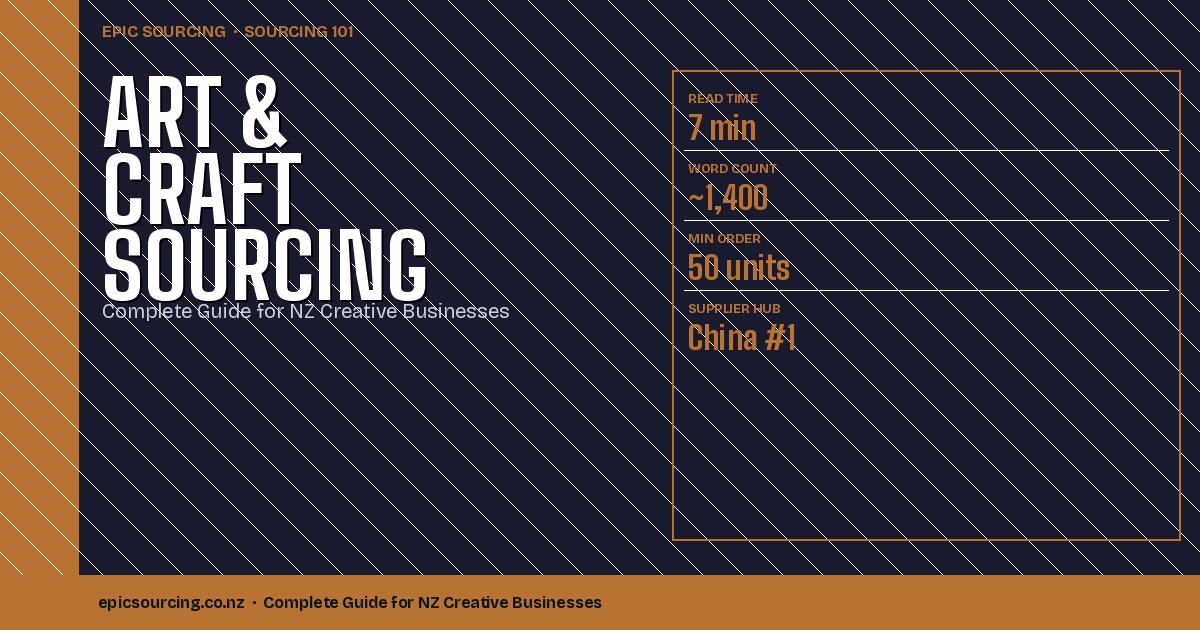
How to Source Art & Craft Products from China: A Complete Guide for NZ Creative Businesses

.svg)
New Zealand's creative economy is buzzing right now. From hand-poured candle kits to textured DIY wall art sets and art-to-sell product lines, Kiwi entrepreneurs are launching craft-based businesses at a pace we haven't seen before. And more and more of them are turning to China — not as a last resort, but as a strategic first move.
The good news? Sourcing art and craft products from China is more accessible than ever for NZ businesses, whether you're ordering 50 units to test a concept or 5,000 units to stock a growing retail line. The not-so-good news? There are a few gotchas that catch first-timers off guard — from confusing material quality tiers to supplier communication barriers.
So let's break it all down. Here's everything you need to know about sourcing art and craft products from China as a Kiwi business owner.
Why China Is the Go-To for Art & Craft Sourcing
China manufactures the lion's share of the world's art and craft supplies — everything from acrylic paint and paintbrushes to canvas panels, resin kits, polymer clay sets, knitting supplies, and DIY jewellery components. Yiwu is home to the world's largest small commodities market — a 4-million-square-metre labyrinth of suppliers covering craft materials, stationery, hobby supplies, and more. Guangzhou and Shenzhen have strong capabilities in electronics-integrated craft products. Shanghai-based suppliers cater more to premium and export-grade product lines.
For NZ businesses, the advantages are hard to ignore: unit costs typically run 60–80% lower than NZ wholesale, MOQs for many craft products sit at 100–500 units, and most experienced suppliers are well-versed in export documentation.
What Types of Art & Craft Products Can You Source from China?
The range is vast. Here's a snapshot of what NZ creative businesses commonly import:
- DIY kits — textured art sets, resin pour kits, macramé starter kits, paint-by-numbers
- Art supplies — acrylic, watercolour and oil paints; brushes; palette knives; canvas panels
- Craft tools — cutting machines, heat embossing tools, loom sets, pottery tools
- Stationery and journalling — washi tape, stickers, notebooks, calligraphy sets
- Packaging and display materials — gift boxes, organza bags, kraft mailers
- Hobby and model kits — wooden model aircraft, 3D puzzles, miniature painting sets
The art and craft niche is particularly well-suited to private labelling — adding your own branding to products that factories already make at scale.
Sourcing Hack #1: Order the Supplier's "Bestseller" First — When scoping a new category, ask shortlisted suppliers for their top-selling product. Bestsellers move in volume for a reason — they're proven, well-manufactured, and priced right. Use them as your quality benchmark before ordering custom items.
How to Find and Vet Art & Craft Suppliers in China
Start on Alibaba or Made-in-China.com. Filter for Trade Assurance, Gold Supplier status, and verified exports. Shortlist 5–8 suppliers. Request detailed product specs — weight, dimensions, material composition, packaging options. Check their export history. Get samples before you commit — colour accuracy, material feel, and finish quality can't be assessed from photos. Video call the factory — a legitimate supplier will happily do a walk-through of their production floor.
Understanding MOQs, Lead Times & Costs for Craft Products
Art and craft products generally have more flexible MOQs than electronics or furniture:
- Standard catalogue items: MOQ 100–300 units
- Semi-custom products (your logo on existing packaging): MOQ 500–1,000 units
- Fully custom-designed products: MOQ 1,000–3,000 units
- Production lead time: 20–35 days standard; 45–60 days custom
- Sample time: 7–14 days
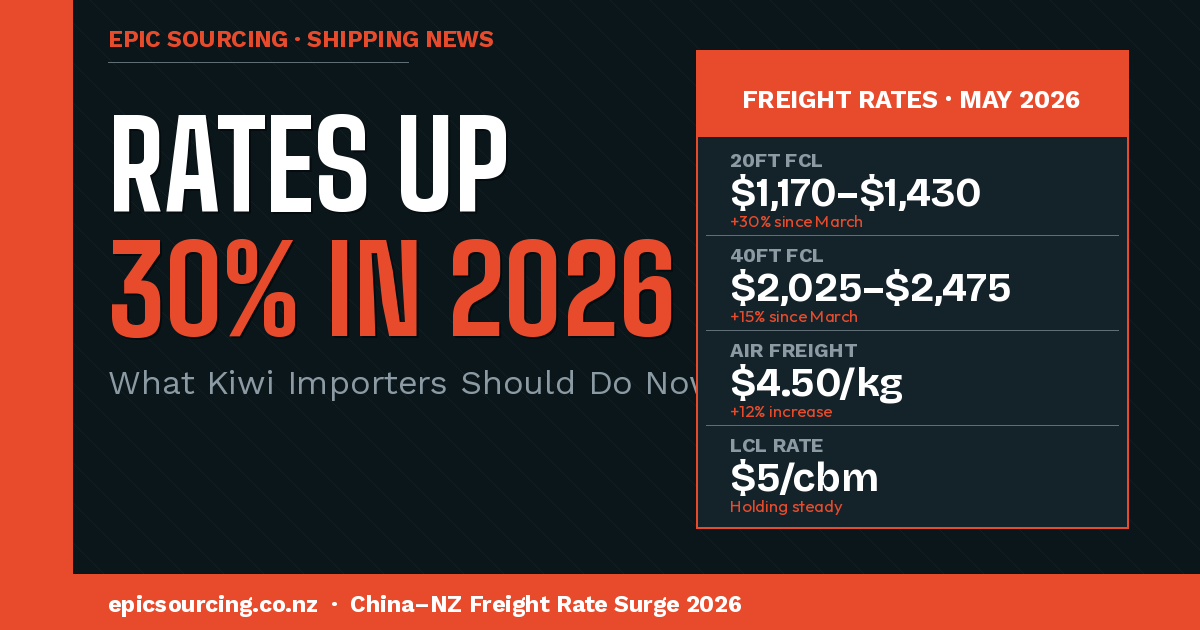
August 2026 sea freight rates from China to NZ have jumped 36–38% from June — currently $2,250–$2,750 for a 20ft container. For smaller orders, LCL (less than container load) typically runs $280–$380/CBM to Auckland. Most art supplies attract 0% import duty under the NZ-China FTA.
Sourcing Hack #2: Negotiate a "Buffer Quantity" Into Your First Order — Ask your supplier to pack 2–5% extra units at no additional cost. This protects you against breakage, quality rejects, or miscounts during transit — especially important for fragile items like glass paint bottles or ceramic tool holders.
Private Labelling Your Art Products: What's Possible
Private labelling means creating your own branded product line using a Chinese manufacturer's existing production capability. This might mean putting your brand on a range of acrylic paint sets, designing a unique kit experience with your artwork on the box, or creating a signature palette of colours exclusive to your label. Factories in Yiwu and Guangzhou are well-experienced with this process. The key constraint is MOQ — private label usually requires at least 500 units per SKU to be economical.
Compliance and Safety Considerations for Art Supplies
Art and craft products — especially those accessible to children — are subject to NZ product safety standards. Key things to check:
- ACMI certification for paints and art materials
- EN71 (European toy safety standard) for craft kits that could be used by children
- SDS (Safety Data Sheets) for any solvents, resins, or chemical-based materials
- NZ Consumer Guarantees Act — products must be safe and fit for purpose
Ask for third-party test reports from suppliers and verify they were issued by a recognised testing lab (SGS, BV, Intertek).
Ready to Source Art & Craft Products?
The businesses that succeed in this space test small before scaling, invest in proper samples, choose quality over lowest-price, and think carefully about branding from day one. Ready to get started? Book a free 30-minute consultation with the Epic Sourcing team at epicsourcing.co.nz — we'll help you figure out exactly where to source, what to expect, and how to avoid the common pitfalls.
Related Articles

Let’s Make It Epic
We're here to make sourcing simple – and a whole lot less stressful.
We are experiencing a higher volume of enquiries than usual. Our standard reply time for form submissions and emails is within 72 hours.
If your matter is urgent, please schedule a video call using the link below.
