.svg)
How to Source Eco-Friendly Products from China for Your NZ Brand

.svg)
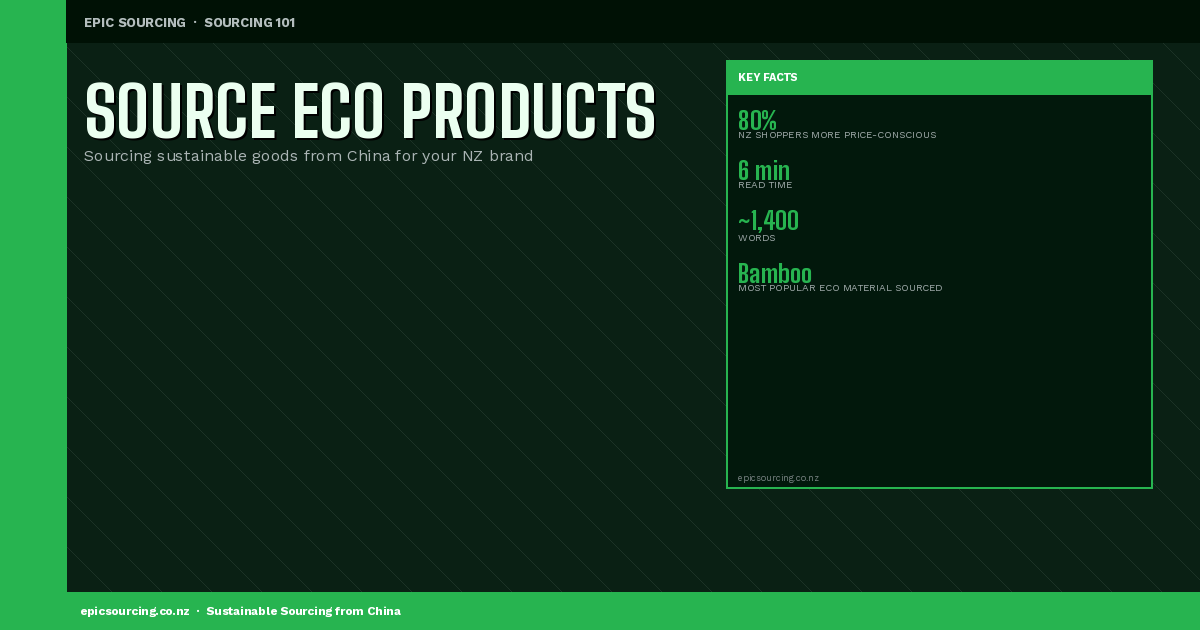
Eco-friendly products are no longer a niche. Walk into any New Zealand supermarket, boutique, or Shopify store and you'll find bamboo toothbrushes, compostable packaging, natural skincare, reusable everything, and plant-based cleaning products. The NZ consumer has shifted decisively — and with 80% of Kiwi shoppers planning to be even more price-conscious in 2026, eco products that are genuinely affordable are particularly in demand.
Here's the interesting thing: the vast majority of these eco products are made in China. Chinese factories have made enormous strides in sustainable manufacturing — investing in renewable energy, carbon reduction, and eco-certified production lines — and the range of genuine eco products available is huge and growing.
Whether you're launching an eco brand from scratch (like a flushable wipes line or a bamboo activewear range), adding a sustainable offering to an existing business, or just wanting to import more responsibly, this guide walks you through how to do it well.
What Eco-Friendly Products Can You Actually Source from China?
The range is genuinely impressive. Personal care and wellness includes bamboo toothbrushes, combs, and skincare tools; natural fibre face cloths and cotton rounds; eco packaging for cosmetics (glass, aluminium, biodegradable plastics); and natural ingredient skincare and body care.
Home and kitchen covers bamboo cutting boards, utensils, and storage; compostable coffee cups, plates, and cutlery; beeswax wraps and natural food storage alternatives; and reusable bottles, cups, and bags.
Apparel and textiles: organic cotton basics and activewear; bamboo fabric clothing (incredibly soft, naturally antimicrobial); recycled polyester apparel made from plastic bottles; and GOTS-certified natural dye garments.
Cleaning and household: compostable wipes and cloths; natural cleaning concentrates; and refillable product formats designed to reduce plastic waste.
How to Verify a Supplier's Sustainability Claims
This is the hard part. "Eco-friendly" and "sustainable" are not protected terms — any factory can print them on a product sheet. Your job as an importer is to verify those claims before they become your claims to NZ consumers. What to look for:
- Third-party certifications: Real certifications from independent bodies are the gold standard
- Factory audit reports: Ask for recent social compliance and environmental audit results (BSCI, SA8000, ISO 14001)
- Material declarations: Request full material safety data sheets (MSDS) for any product making ingredient claims
- Supply chain transparency: Can the factory name where their raw materials come from? A bamboo product supplier should know their bamboo source
- Production photographs and video: Ask for footage showing actual production methods, not just polished marketing shots
Be cautious of suppliers who respond to eco enquiries with generic marketing language and can't provide specific documentation. It's a red flag every time.
Sourcing Hack #1: Ask the Three Hard Questions — Before committing to any eco supplier, ask: (1) "Can you provide your latest third-party environmental audit?" (2) "What certifications cover this specific product?" (3) "What happens to your production waste?" A legitimate eco manufacturer will have ready answers. A greenwasher won't.
Eco Certifications to Look for When Sourcing from China
Here are the certifications that actually carry weight:
- GOTS (Global Organic Textile Standard): The benchmark for organic textiles. Covers fibre, processing, and social criteria. If it's GOTS certified, you can trust the organic claim.
- OEKO-TEX Standard 100: Tests for harmful substances in textiles. Common on bamboo and cotton products. Tells you the product is safe, though not necessarily made sustainably.
- FSC (Forest Stewardship Council): For timber, bamboo, and paper products. Verifies responsible forestry practices.
- GRS (Global Recycled Standard): For products made from recycled materials — particularly relevant for recycled polyester activewear.
- BSCI / SA8000: Social compliance standards covering factory working conditions. Important for ethical sourcing overall.
- EN 13432 / AS 4736: The standards for products sold in NZ as commercially compostable. Critical for compostable wipes, packaging, and serviceware.
Private Label Eco Products — Building Your Own Brand
Most eco products in the NZ market are sold under private labels — a NZ business puts their own branding on a product manufactured in China. This is exactly the model behind eco brands like flushable wipes and bamboo personal care lines, and it's accessible to businesses of all sizes. The private label eco process:
- Define your eco claim: What's the specific sustainability story? Biodegradable? Organic? Recycled content? Define it clearly before approaching suppliers — it determines which factories you need.
- Find certified factories: Use your certifications checklist to shortlist suppliers who can actually back up the claim with documentation
- Request samples: Get physical samples and test them yourself; for compostable products, review the certification documentation carefully
- Artwork and packaging: Work with a designer on NZ-market packaging that communicates your eco story clearly and compliantly
- MOQ considerations: Many eco private label products have MOQs of 500-2,000 units — lower than standard product MOQs because manufacturers know eco brands often start small
One important compliance note for NZ: the Commerce Commission has become increasingly active on greenwashing claims. Make sure every claim on your product has documentary backing — don't put "100% biodegradable" on your packaging unless you have a certification or test report that supports it.
Sourcing Hack #2: Start Small, Test the Market — For eco private label products, ask your supplier for a 500-unit trial run even if their standard MOQ is higher. Many Chinese eco manufacturers will accommodate a small sample production run for new clients, particularly if you can show you're building a brand. It limits your risk while you validate NZ market demand.
How to Price Eco Products Competitively in New Zealand
Eco products typically cost more to produce than conventional equivalents — certified materials cost more, and compliance adds cost. The good news is that NZ consumers have shown willingness to pay a premium for genuine sustainability. A practical pricing framework: land your eco product at a cost that allows a 3-4x retail markup (standard for NZ retail and DTC). Factor in any certification costs. Account for potentially higher per-unit freight costs on eco packaging. Don't over-engineer the eco story on the first product — start with one clear, certified claim.
Price-conscious NZ shoppers in 2026 want products that are eco AND affordable. The sweet spot is products where the eco angle is genuine and documentable, and the retail price is within 10-20% of the conventional equivalent.
Ready to Launch Your Eco Brand?
Launching an eco brand or adding a sustainable range to your business is genuinely achievable — you just need the right sourcing strategy and supplier verification process. Epic Sourcing helps NZ businesses find certified eco manufacturers in China and set up private label programmes from start to finish. Book a free consultation at epicsourcing.co.nz to get started.
Related Articles



Let’s Make It Epic
We're here to make sourcing simple – and a whole lot less stressful.
We are experiencing a higher volume of enquiries than usual. Our standard reply time for form submissions and emails is within 72 hours.
If your matter is urgent, please schedule a video call using the link below.
