
.svg)
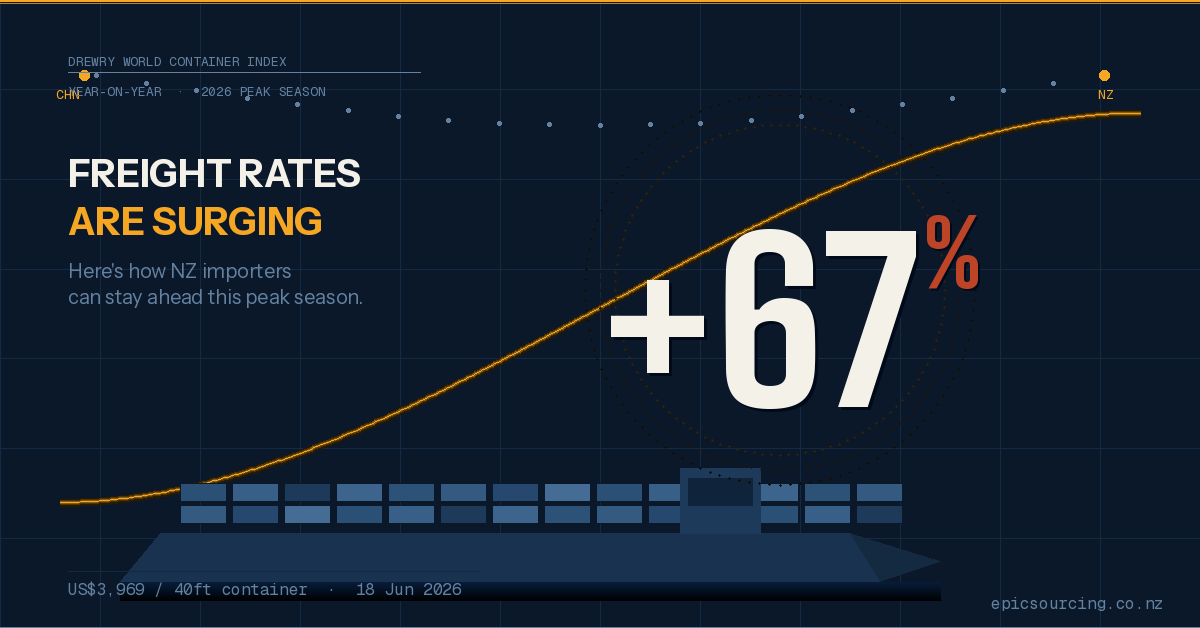
Freight Rates Are Up 67% — Here's How NZ Importers Can Stay Ahead This Peak Season

.svg)
What's Driving the Freight Rate Surge?
The Drewry World Container Index hit US$3,969 per 40-foot container on 18 June 2026 — up 12% in a single week, and a staggering 67% higher than the same time last year. For Kiwi businesses importing from China and other Asian manufacturing hubs, that's a direct hit to your landed cost and, if you're not careful, your profit margins.
The good news? Unlike the shock disruptions of 2021–2022, this current freight surge is largely predictable. It's peak season behaviour — and with the right preparation, you can navigate it without the panic buying and rushed decisions that cost businesses so much money last time around.
- Peak Season Demand: Global retailers are placing Q3 orders early to beat further rate increases, putting pressure on available vessel capacity.
- Red Sea & Middle East Tensions: Ships are still rerouting around the Cape of Good Hope rather than through the Suez Canal, adding 10–14 days to transit times and burning more fuel.
- Port Congestion: As more cargo funnels through alternative ports, congestion is building at key hubs in Europe and Asia.
- Carrier Capacity Discipline: Major shipping lines are managing vessel deployment more tightly, keeping rates elevated.
The Silver Lining for NZ Importers
While global freight rates are spiking, shipping from China to New Zealand has remained relatively stable compared to trans-Pacific or Europe routes. NZ sits in a bit of a sweet spot geographically — our trading lanes (Shanghai, Ningbo, Yantian to Auckland or Tauranga) aren't as heavily impacted by Middle East rerouting as European importers.
NZ imports from China actually increased 15% in early 2026. More Kiwi businesses are sourcing from China than ever, which means competition for space on those vessels is heating up. Forwarders are reporting that booking lead times are stretching out.
Sourcing Hack #1: Lock in your shipping rates now — Contact your freight forwarder today and ask about spot rate locks or short-term contracts for Q3 shipments. Even a 2-week advantage in booking can save you hundreds per container compared to last-minute panic bookings.
Use the NZ-China FTA to Offset Rising Freight Costs
One completely free and massively underutilised tool is the NZ-China Free Trade Agreement Certificate of Origin. If your products meet the rules of origin criteria, you can apply for preferential tariff rates when importing into NZ — directly offsetting a chunk of the freight cost increase.
- Work with your Chinese supplier to ensure products qualify under the FTA rules of origin
- Request a Certificate of Origin from your supplier's local chamber of commerce
- Submit it to NZ Customs when goods arrive to claim the preferential rate
- Keep records — NZ Customs can audit up to 4 years back
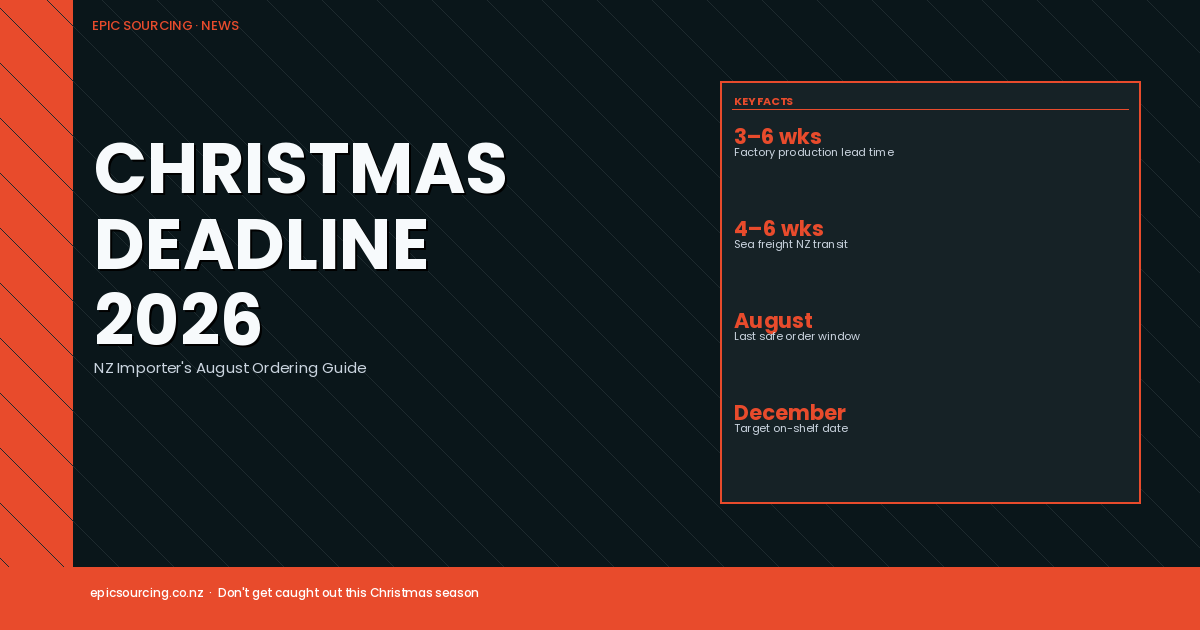
Sourcing Hack #2: Pre-stock before August — Peak season typically runs June–October. The longer you wait to place orders, the higher the freight rates and the longer the lead times. If you have products you'll need for Christmas, the best time to order was last month. The second best time is right now.
How to Restructure Your Ordering to Absorb Freight Increases
- Consolidate Orders: Instead of multiple small shipments, consolidate into fewer, larger orders to maximise container fill rates.
- Flexible Destination Ports: Auckland gets most attention, but Tauranga and Lyttelton can sometimes offer better availability and lower port charges.
- Sea + Air Hybrid: For high-margin, time-sensitive products like electronics accessories or fashion, consider air-freighting a smaller first run while bulk follows by sea.
- Longer-term Forwarder Agreements: If you're moving consistent volumes, talk to your freight forwarder about quarterly or annual rate agreements for cost predictability.
What the Current Freight Environment Means for Your Pricing Strategy
If freight rates are 67% higher YoY and you haven't updated your pricing model, you might be selling at thinner margins than you think. Now is the time to review your landed cost calculations and ensure your pricing accounts for freight volatility.
The businesses that weathered 2021–2022's supply chain chaos best were those that had either built a freight buffer into their pricing, or had strong supplier relationships that allowed them to negotiate payment terms.
Working With a Sourcing Partner to Navigate Freight Season
One underrated advantage of working with a sourcing partner during peak freight season is their network of relationships with freight forwarders, consolidators, and suppliers. When space is tight, who you know matters.
Sourcing agents with volume across multiple clients can often negotiate better rates or secure space not available to a business acting alone — whether you're sourcing activewear, hardware, hospitality supplies, or bamboo products.
Ready to take action? Epic Sourcing NZ offers a free 30-minute consultation for Kiwi businesses looking to source smarter. Book your free call at epicsourcing.co.nz/contact.
Related Articles

Let’s Make It Epic
We're here to make sourcing simple – and a whole lot less stressful.
We are experiencing a higher volume of enquiries than usual. Our standard reply time for form submissions and emails is within 72 hours.
If your matter is urgent, please schedule a video call using the link below.
