.svg)
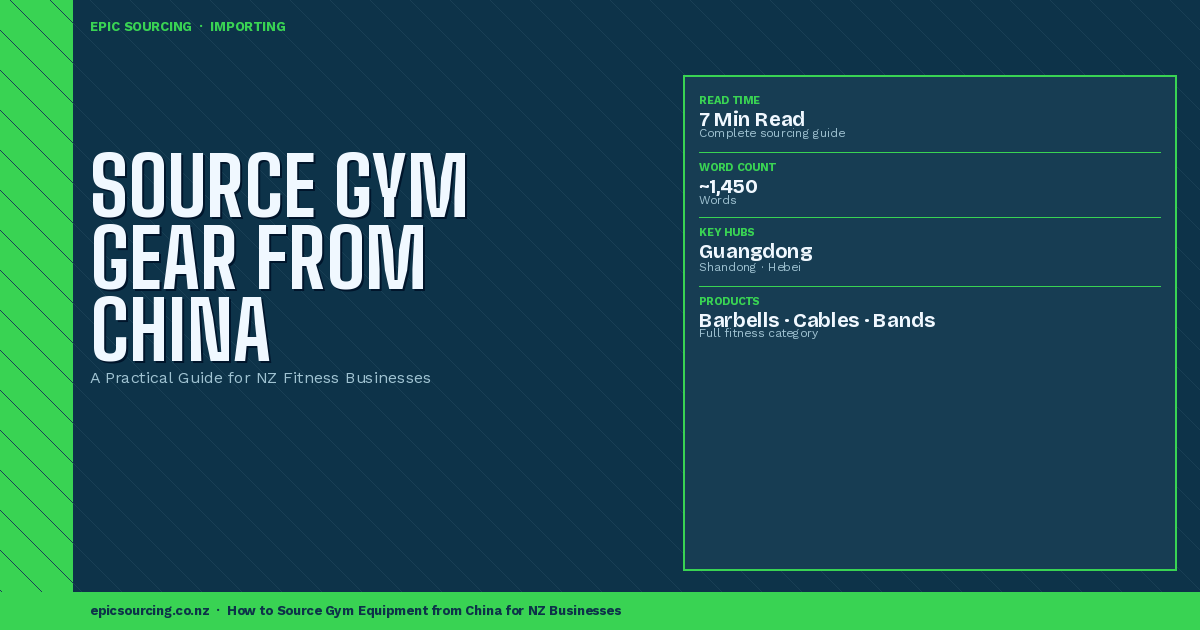
How to Source Gym Equipment and Fitness Products from China for Your NZ Business

.svg)
New Zealand has a serious fitness culture. Between CrossFit boxes, boutique studios, commercial gyms, PT studios, and the growing home gym market, there's consistent and growing demand for quality fitness equipment — and a lot of it is being imported from China.
The fitness equipment industry in China is genuinely world-class. Major manufacturing hubs in Guangdong, Shandong, and Hebei produce everything from budget resistance bands to commercial-grade cable machines and Olympic barbells. The same factories that supply global brands like Rogue, Titan, and TechnoGym with components are often available to smaller buyers as well — you just need to know how to find them and what to look for.
Whether you're a gym owner looking to kit out a new facility, a retailer expanding your fitness category, or an eCommerce brand building a private label fitness line, this guide will walk you through what you need to know about sourcing gym equipment and fitness products from China.
What Types of Fitness Equipment Can You Source from China?
Pretty much everything. China manufactures across the full spectrum of fitness products, from entry-level home gym gear to heavy commercial equipment. Here's a broad overview of the categories:
- Commercial gym equipment — Cable machines, functional trainers, leg press machines, lat pulldowns, and complete gym fit-outs. Key suppliers are concentrated in Guangdong and Shandong provinces.
- Free weights and weightlifting — Olympic barbells, weight plates, dumbbells, kettlebells, and bumper plates. Hebei province is a major hub for cast iron and steel fitness products.
- Cardio equipment — Treadmills, stationary bikes, rowing machines, and ellipticals. This category requires more careful supplier selection — quality varies significantly.
- Functional training and accessories — Resistance bands, battle ropes, slam balls, medicine balls, plyometric boxes, and pull-up rigs. These are simpler products with less mechanical complexity, making them easier to QC and import.
- Yoga and studio products — Yoga mats, blocks, straps, and bolsters. The yoga mat category has excellent private label options at relatively low MOQs.
- Home gym and small equipment — Adjustable dumbbells, resistance tubes, pull-up bars, jump ropes, and compact home gym systems. The home gym segment has retained strong demand.
Where to Find Fitness Equipment Manufacturers in China
Knowing the right sourcing channels is critical. For gym equipment specifically:
- Alibaba and Made-in-China.com — The obvious starting points. For fitness equipment, look for suppliers with "Gold Supplier" status and verified audit reports. For commercial equipment, prioritise factories that export to developed markets like Europe, USA, or Australia.
- Trade shows — The China International Fitness Expo (CIFE), held annually in Shanghai, is one of the best events in the world for fitness equipment sourcing. The Canton Fair (Guangzhou, April and October) also has a significant sporting goods section.
- Sourcing agents — For most Kiwi businesses, using a sourcing agent with boots on the ground in China is the most practical route to finding quality fitness equipment suppliers.
Sourcing Hack #5: Search by Factory Location, Not Just Product — The best fitness equipment factories in China are concentrated in specific regions. For strength equipment, search for factories in Guangdong and Shandong. For rubber and cast iron weights and plates, look at Hebei. Knowing where the quality manufacturers are clustered helps you filter faster.
What to Look for in a Fitness Equipment Supplier
Not all Chinese fitness equipment factories are equal. Here's what to assess when evaluating a potential supplier:
- Export history and certifications — Reputable fitness equipment manufacturers will have CE certification (European market compliance) and EN ISO standards for safety-critical products. Suppliers who already export to Europe or the US have typically gone through the compliance verification process.
- Factory size and production capacity — For commercial equipment, you generally want a mid-to-large manufacturer with dedicated QC teams. For accessories and yoga products, smaller factories can often offer more flexibility and customisation.
- Sample quality — Always request and pay for samples before placing a production order. Evaluate weld quality on steel products, surface finish and coating, hardware quality (bolts, pins, cables), and packaging integrity.
- After-sales support and warranty policy — This matters especially for commercial equipment. Get the warranty and after-sales policy in writing before you order.
Sourcing Hack #6: Ask Your Supplier for Their Test Reports First — Before diving deep into supplier conversations, ask for existing test reports and compliance certificates for the specific products you want. Reputable factories will have these ready. If a supplier can't provide them, that's a red flag — especially for safety-critical equipment.
Compliance and Safety for the NZ Market
Fitness equipment sold in New Zealand needs to meet relevant safety standards — particularly for products used by the public or in commercial settings.
For commercial gym equipment, check compliance with AS/NZS standards where applicable. AS/NZS 4488 covers gymnasium equipment, and if you're supplying a commercial gym or fitness facility, your product should meet or exceed these standards.
For electrical fitness equipment (motorised treadmills, ellipticals, smart bikes), New Zealand electrical safety compliance requires a valid Energy Safety Approval. Products sold in Australia and NZ need to be registered with the Electrical Equipment Safety System (EESS).
For lower-risk products (resistance bands, yoga mats, free weights, accessories), compliance requirements are less prescriptive, but ensure materials are non-toxic, durable, and meet labelling requirements under the Fair Trading Act.
Costs and Logistics for Gym Equipment Imports
Gym equipment is heavy — and that's the single biggest factor that shapes your import logistics strategy.
Sea freight is the only cost-effective option for most fitness equipment. A full 40-foot container from China to New Zealand runs approximately NZD $4,000–$6,000 in freight costs depending on origin and carrier.
- Duties and GST — The standard NZ import duty rate is low (often 0–5%) for fitness equipment, but you'll need to pay GST on the customs value. Factor this into your landed cost calculations.
- Lead times — Off-the-shelf products from stock can ship within 1–2 weeks. Custom or made-to-order equipment typically requires 4–8 weeks production time, plus 18–28 days for sea freight. Total lead time from order confirmation to product in your hands is typically 8–12 weeks.
Ready to Source Fitness Equipment for Your NZ Business?
Importing gym equipment from China is one of the most commercially compelling import opportunities available to Kiwi businesses right now. The quality gap between Chinese-manufactured fitness equipment and the big international brands has narrowed significantly in recent years — and the price gap hasn't.
The key to making it work is finding the right suppliers, building in proper quality control, and understanding your compliance obligations for the NZ market.
If you'd rather not navigate that process yourself, Epic Sourcing is here to help. We work with NZ fitness businesses, gym owners, and retailers to source quality equipment from trusted manufacturers in China. Book a free consultation and let's talk about what you're looking for.
Related Articles

Let’s Make It Epic
We're here to make sourcing simple – and a whole lot less stressful.
We are experiencing a higher volume of enquiries than usual. Our standard reply time for form submissions and emails is within 72 hours.
If your matter is urgent, please schedule a video call using the link below.
