.svg)
Best Products to Import from China for Your NZ Online Store in 2026

.svg)
One of the most common questions we get at Epic Sourcing is: ‘What should I actually sell?’ It sounds simple, but picking the right product to import is genuinely one of the hardest parts of building an eCommerce business — and getting it right can mean the difference between a thriving store and a garage full of unsellable stock.
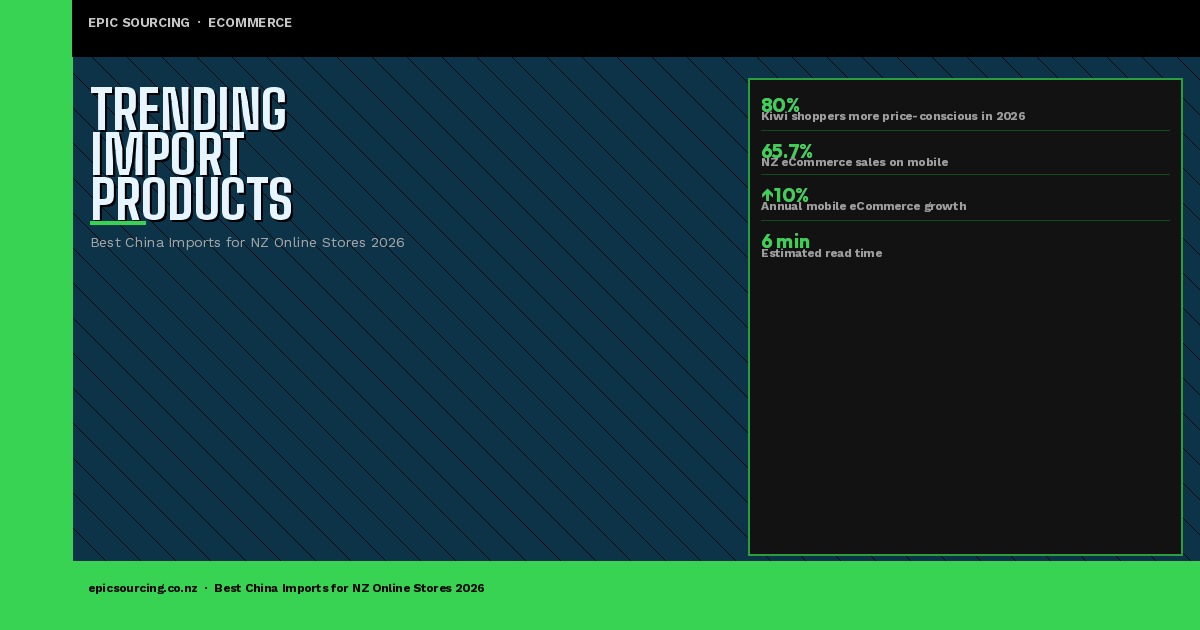
The good news: there are clear signals about what's working in the NZ market right now. New research shows that 80% of Kiwi shoppers are more price-conscious than ever in 2026, favouring private label products and high-quality alternatives to big-name brands. And with 65.7% of NZ eCommerce sales happening on mobile — growing at 10% annually — the opportunity for well-positioned online sellers is real and growing.
Here's a look at the categories and specific products showing strong traction for NZ online stores importing from China.
1. Sports & Fitness Equipment: Balance Boards and Functional Training Gear
Balance boards are having a genuine moment. Search volume data shows 100,000+ monthly searches globally, and NZ fitness consumers — who've embraced home gym setups since the pandemic — are actively looking for quality training tools that don't require a gym membership.
What makes balance boards attractive for importers: they're compact (good for LCL shipping), appeal to a broad customer base (kids through to adult physiotherapy), and the $40–$200 retail price range allows for healthy margins on a Chinese-sourced product. Beyond balance boards, resistance bands, foam rollers, portable pull-up bars, and compact kettlebell sets are all strong sellers.
Sourcing Hack #1: Test before you scale — Order a sample run of 50–100 units before committing to a full container. List on Trade Me and/or your Shopify store, run a small Meta ad spend ($200–$500), and validate demand before placing a 500+ unit order. It's the cheapest insurance policy in product importing.
2. Motor Vehicle Accessories: Dash Cams and Dashboard Tech
Motor vehicle dashboard accessories saw 140% annual sales growth in 2026 — one of the highest growth rates across any consumer product category. The core driver is dash cams. With insurance companies increasingly recognising dash cam footage in claims and Kiwi drivers becoming more safety-conscious, demand is strong and growing.
Related categories performing well:
- 360-degree dash cam systems (front and rear)
- GPS trackers for vehicles and assets
- Phone mounts and wireless charging pads
- Blind spot detection add-ons
- Tyre pressure monitoring systems
China manufactures the vast majority of the world's dashboard electronics, and quality has improved dramatically. Brands you've never heard of are now making products that match or exceed international names at 40–60% of the retail price — exactly what NZ consumers want in 2026.
Sourcing Hack #2: Check CE and RCM compliance — Electronics imported into NZ must comply with relevant safety standards. For dash cams and vehicle electronics, ensure your supplier can provide CE certification and ask your freight forwarder about RCM (Regulatory Compliance Mark) requirements. Compliant products avoid costly returns or regulatory issues down the line.
3. Robotic Lawn Mowers and Smart Garden Tools
Robotic lawn mowers are showing 100,000+ monthly searches globally and are hitting the NZ mainstream in 2026. The technology has matured, prices have dropped significantly (entry-level models are now available at $300–$600 landed cost), and Kiwi homeowners — many with medium to large sections — are prime customers.
This is a higher-ticket import category, which means higher margin potential per unit, lower volume needed to hit profit targets, and a stronger case for brand investment (private label packaging, warranty programmes). Chinese manufacturers including Segway (Ninebot) and various OEM factories are producing solid quality at price points that allow genuine retail markup.
4. Activewear and Private Label Clothing
Activewear remains a powerhouse category for NZ eCommerce. The combination of enduring athleisure trends, NZ's outdoor lifestyle culture, and consumer appetite for private label alternatives to Nike and Lululemon creates a strong opportunity for importers.
China's activewear manufacturing — concentrated in Guangdong and Fujian — offers excellent quality at competitive prices. Fabrics like recycled polyester, bamboo blends, and four-way stretch are available from Chinese mills and are in strong demand from NZ consumers who care about both performance and sustainability credentials.
The private label angle is key. Rather than importing generic activewear and competing on price alone, sellers who invest in their own brand identity — label, packaging, brand story — command significantly higher margins and build genuine customer loyalty.
Sourcing Hack #3: Vietnam for apparel, China for accessories — Consider this split: source base garments (tights, sports bras, shorts) from Vietnam for stronger ESG credentials and CPTPP tariff benefits, and source accessories (water bottles, gym bags, resistance bands) from China where pricing and MOQs are more flexible. This gives your brand a strong sustainability story without sacrificing cost competitiveness on accessories.
5. Skincare and Wellness Products
Skincare and vitamins are perennial strong sellers, and the NZ market in 2026 is particularly receptive to ‘clean beauty’ and ‘better-for-you’ wellness products at accessible price points. The ‘80% of NZ shoppers are more price-conscious’ trend doesn't mean they're buying cheap — it means they want quality without the premium brand markup.
Opportunities include private label serums and moisturisers (manufactured in China with international cosmetic GMP certification), LED face masks and beauty devices, natural ingredient-focused products (vitamin C serums, hyaluronic acid, retinol), and men's grooming — a growing market with less competition than women's skincare.
Important note: skincare and supplements imported into NZ are subject to Medsafe and MPI regulations. Work with a supplier who understands NZ compliance requirements before importing any ingestible or leave-on cosmetic product.
How to Choose Your Product: A Simple Framework
- Passion + knowledge: Choose a category you understand as a consumer. Your product knowledge is a genuine competitive advantage.
- Margin check: Aim for a minimum 3x markup on landed cost. If a product costs $30 landed, you need to sell it for at least $90 to have room for marketing, returns, and profit.
- Volume vs ticket: High-volume, low-ticket items need significant order quantities to generate meaningful revenue. High-ticket, lower-volume items are more capital-efficient for smaller operations.
- Differentiation path: Can you private label it? Create a bundle? Own a specific niche? Generic imports are a race to the bottom; differentiated products build businesses.
The NZ eCommerce market is small by global standards — but that's also what makes it accessible. You don't need thousands of monthly unit sales to build a profitable business. You need the right product, the right price point, and the right sourcing partner. That's where we come in. Epic Sourcing helps NZ online sellers find and vet suppliers, arrange quality control, and manage logistics from factory to your door. Book a free consultation and let's talk about what you want to sell.
Related Articles



Let’s Make It Epic
We're here to make sourcing simple – and a whole lot less stressful.
We are experiencing a higher volume of enquiries than usual. Our standard reply time for form submissions and emails is within 72 hours.
If your matter is urgent, please schedule a video call using the link below.
