
.svg)
China-to-NZ Shipping Rates Are Up 30% — Here's How to Protect Your Business in 2026

.svg)
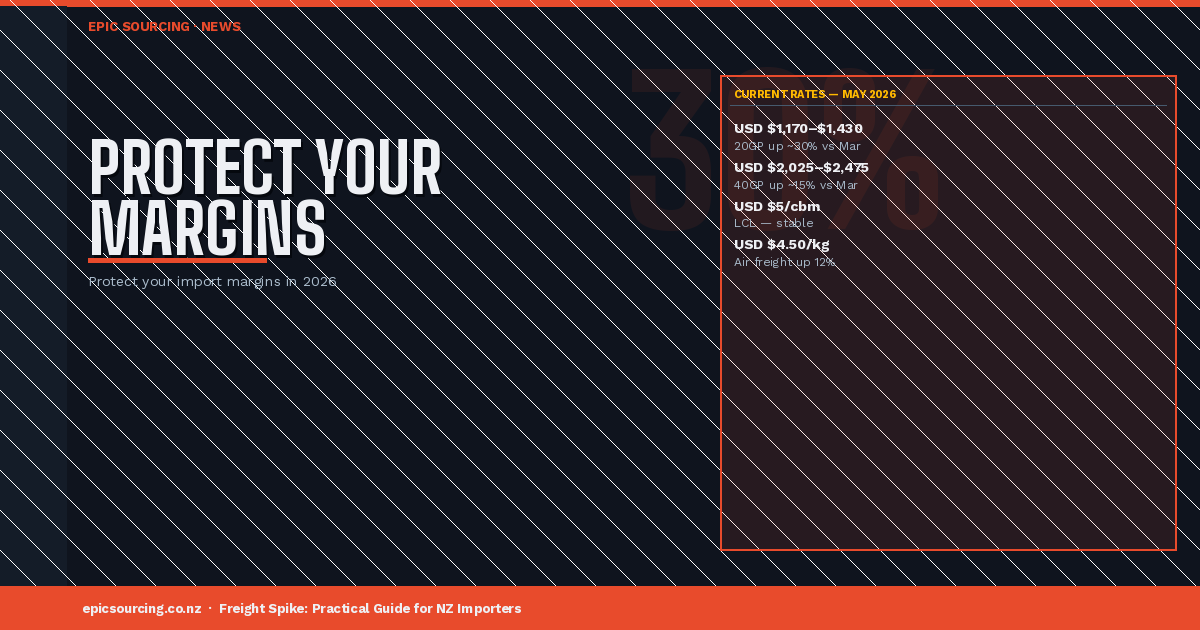
What Are Freight Rates from China to NZ Right Now?
As of May 2026, here's what you're looking at for standard sea freight from major Chinese ports (Shanghai, Ningbo, Guangzhou) to Auckland:
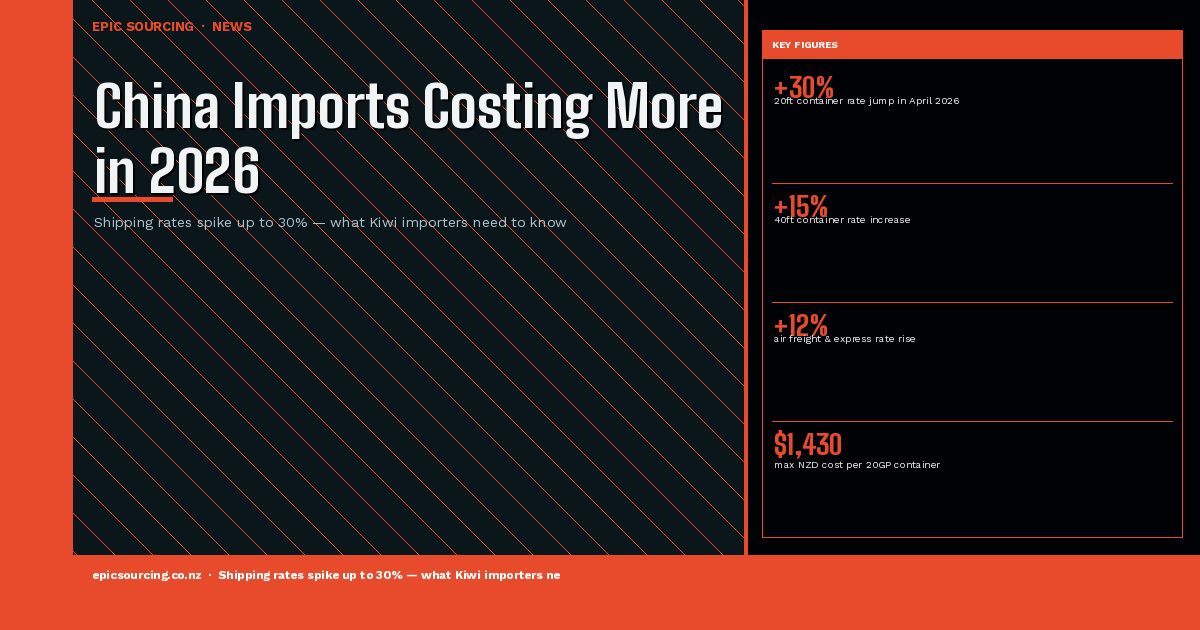
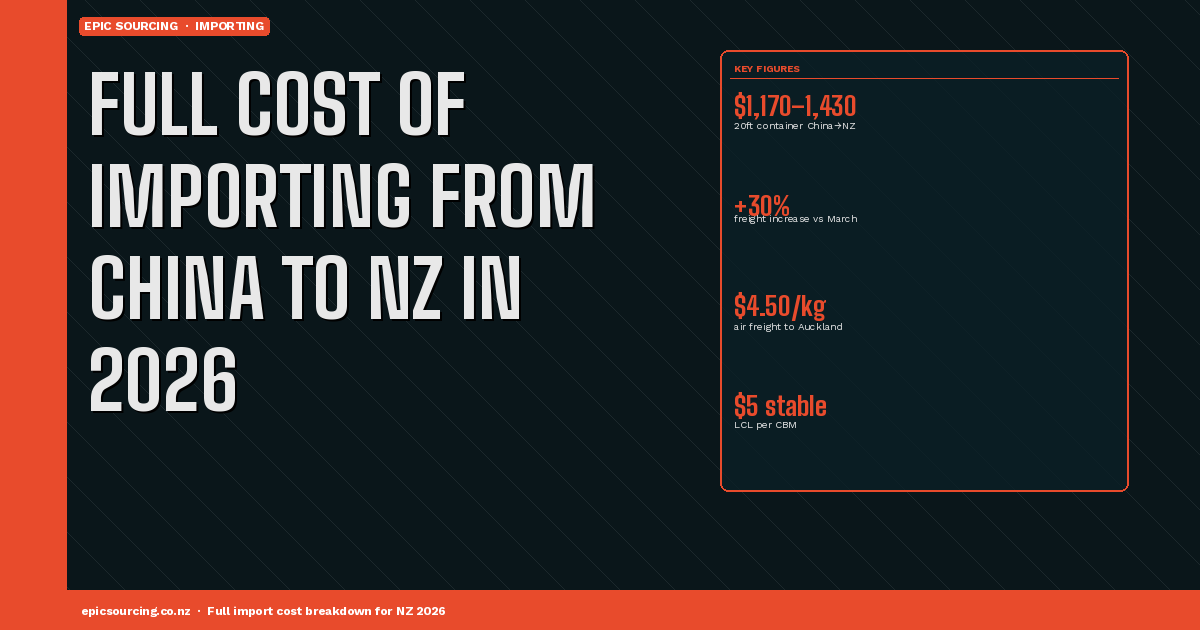
- 20GP (20-foot container): USD $1,170–$1,430 — up around 30% vs March 2026
- 40GP (40-foot container): USD $2,025–$2,475 — up roughly 15% vs March 2026
- LCL (Less than Container Load): USD $5/cbm — relatively stable
- Air freight: USD $4.50/kg — up 12%
- Express air: USD $7.55/kg — up 12%
Transit times are holding steady at 20–23 days for sea and 7–9 days for air. The LCL rate being stable is actually good news for smaller importers — if you're shipping under about 15 cbm, LCL might be your most cost-effective option right now.
What's Driving the Rate Increase?
A few things are converging at once, and understanding them helps you anticipate what might come next.
- Post-peak season restocking pressure: Many NZ businesses pushed orders earlier in Q1, and that demand wave is still rippling through vessel capacity.
- Global supply chain disruption: Ongoing geopolitical tension in key shipping corridors has created unpredictable capacity availability across Asia-Pacific routes.
- US-China trade war ripple effects: With US tariffs on Chinese goods sitting around 145% in some categories, Chinese exporters are redirecting shipping capacity to alternative markets — including the Pacific. More volume on fewer routes = higher rates.
- Carrier discipline: Shipping lines have gotten better at managing blank sailings to keep rates from collapsing.
NZ freight forwarders are pretty consistent in their advice right now: book early, lock in space, and don't gamble on last-minute capacity at reasonable rates.
Sourcing Hack #1: Lock Your Space Early — If you know you have a shipment coming in the next 60–90 days, talk to your freight forwarder now — not when your goods are ready to ship. Space gets allocated weeks out, and last-minute bookings can cost you a premium of $200–$500 per container or worse, a missed sailing.
Sea vs Air: When Does the Maths Change?
With sea freight up, the gap between sea and air is narrowing for some product types. Air at USD $4.50/kg is expensive for anything heavy or dense — furniture, gym equipment, hardware. For those products, sea freight remains the only viable option.
But for high-value, low-weight products — premium skincare, tech accessories, custom jewellery, apparel — air starts making more sense when you factor in the cost of carrying stock for an extra two to three weeks. The other thing worth considering is split shipments: sea freight for your bulk stock, air for your first tranche to hit the market faster.
Sourcing Hack #2: Use the 'Cost Per Day' Lens — When comparing sea vs air, calculate your inventory carrying cost per day (stock value x your cost of capital / 365). If your goods are worth $50,000 and your capital cost is 10%, that's about $137/day just sitting in transit. Air saves 14+ days — that's ~$1,900 in carrying cost. Compare that to the air freight premium and you might find it's closer than you think.
How to Protect Your Import Margins Right Now
Okay, so rates are up. What do you actually do about it? Here are five practical moves:
- Consolidate orders: If you've got multiple smaller orders coming from the same region, consolidate them into one container load.
- Renegotiate terms with your supplier: If your supplier quotes EXW, try to shift to FOB — your supplier covers port loading, which can reduce your effective cost.
- Review your packaging: Bulky packaging wastes CBM. Ask your supplier to optimise inner and outer carton packing — even a 10% volume reduction adds up.
- Shop around freight forwarders: Get at least two quotes. Rates can vary meaningfully between forwarders with different China relationships.
- Plan for the Q3 peak: Freight rates historically spike again in mid-year as retailers stock up for Christmas. If you need goods here by September–October, book and produce now.
What About LCL — Is It Worth It Right Now?
For many Kiwi importers, LCL is the bread and butter of importing — especially when building a product range, testing new products, or running a smaller operation. LCL rates are holding relatively stable at around $5/cbm out of China, which is a meaningful advantage right now. The trade-off is transit time — LCL consolidation adds 5–7 days vs a direct FCL booking, putting you at 25–30 days total.
The Bottom Line
Freight rates are a cost of doing business in import, and they move in cycles. The importers who weather freight volatility best are the ones who plan ahead, work with experienced freight forwarders, and keep their supply chains tight and efficient. It's not about eliminating the cost — it's about managing it intelligently.
Ready to make your move? Book a free 30-minute consultation with the Epic Sourcing team at epicsourcing.co.nz — no obligation, just straight-talking advice from people who do this every day.
Related Articles
Let’s Make It Epic
We're here to make sourcing simple – and a whole lot less stressful.
We are experiencing a higher volume of enquiries than usual. Our standard reply time for form submissions and emails is within 72 hours.
If your matter is urgent, please schedule a video call using the link below.
