
.svg)
China-to-NZ Shipping Rates Are Up 30% — What NZ Importers Should Do Right Now (May 2026)

.svg)
If your freight invoices are looking heavier than usual, you’re not imagining it. Shipping rates from China to New Zealand have climbed sharply since March 2026 — with some container sizes up as much as 30% — and the factors driving that increase don’t look like they’re going away anytime soon.
For Kiwi importers, this is the kind of market movement that can quietly eat your margins if you’re not watching closely. Whether you’re importing activewear, pet products, packaging materials, or hotel furniture, understanding what’s driving the spike — and what you can actually do about it — makes a real difference to your bottom line.
Here’s the full picture, and what we’d recommend doing right now.
What the Numbers Actually Look Like
According to freight data for May 2026, here’s what you’re looking at for China-to-NZ container shipping:
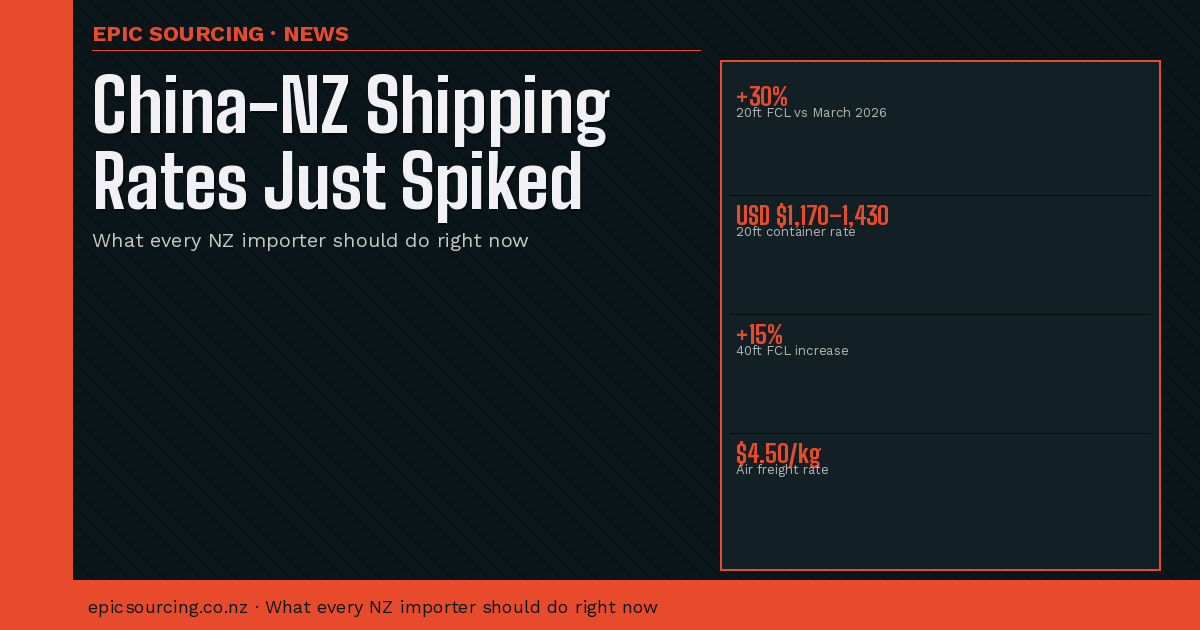
- 20GP FCL (20-foot full container): USD $1,170–$1,430 — up approximately 30% from March 2026
- 40GP FCL (40-foot full container): USD $2,025–$2,475 — up approximately 15% from March 2026
- LCL (less-than-container load): USD $5 per cubic metre — stable
- Air freight: approximately USD $4.50 per kg — up around 12%
Transit times are sitting at 20–23 days for FCL and 21–27 days for LCL. Air freight is still 7–9 days if you need something fast.
The 20-foot container has taken the biggest hit percentage-wise, which is particularly relevant for smaller importers who aren’t filling a full 40-footer. If you’ve been doing 20GP shipments regularly, you’ll feel this in your next invoice.
What’s Driving the Rate Increase?
A few converging factors are pushing rates up simultaneously — which is why the spike feels sharper than usual:
- Equipment tightness. There’s a shortage of available containers in certain Chinese ports, partly driven by the ongoing disruption to US-China trade flows. Containers that would normally circulate through US ports are being redirected, tightening availability for other routes including NZ.
- Surcharges stacking up. Carriers are adding peak season surcharges, equipment imbalance surcharges, and congestion surcharges on top of base rates. These extras can add hundreds of dollars to a shipment.
- Global demand shifting. With US tariffs on Chinese goods remaining elevated, some Chinese exporters who previously focused on the US are redirecting capacity toward other markets — including Southeast Asia and Oceania. This pushes up demand on Pacific routes.
- Seasonal factors. Post-Chinese New Year restocking, combined with pre-winter consumer demand in NZ, creates a seasonal demand spike around April–June every year.
The upcoming Xi-Trump summit in May 2026 could potentially shift the dynamic if new trade agreements reduce US-China tariff pressure — but that’s speculative territory. Plan for current rates, not hoped-for ones.
Sourcing Hack #1: Lock In Rates Early — Ask your freight forwarder about rate lock-in options. Many offer forward booking at a fixed rate for shipments 4–8 weeks out. In a rising rate environment, locking in now can save you hundreds per container. It’s one of the simplest margin-protection moves available.
How This Affects Your Landed Cost
Let’s make this concrete. Say you’re importing a 20GP container of gym equipment from China, with a product FOB value of USD $12,000. Here’s how the freight spike changes your landed cost:
- March 2026: freight at ~USD $900 → total landed cost (incl. duties, GST): approximately NZD $22,500
- May 2026: freight at ~USD $1,300 → total landed cost: approximately NZD $23,100
That’s roughly NZD $600 more per container — which might not sound catastrophic, but if you’re doing 4–6 containers a year, you’re looking at NZD $2,400–$3,600 in additional freight costs annually. That’s real money.
For air freight importers — say you’re flying in a 50kg order of health supplements — the 12% increase takes you from roughly NZD $315 to NZD $352 for freight alone. Manageable per order, but significant over time.
What You Should Do Right Now
Here are five practical moves NZ importers should consider in the current freight environment:
- Get quotes from multiple freight forwarders. Rates vary more than you’d expect between providers, even on the same route. Don’t auto-renew with your existing forwarder without checking the market.
- Reconsider your shipment frequency. If you’ve been doing monthly 20GP shipments, explore whether quarterly 40GP shipments work better for your inventory model. You’ll pay more upfront but likely less per unit of product.
- Check if LCL makes sense for smaller orders. At USD $5/cbm, LCL pricing is currently stable — if you don’t need a full container, this can be a more cost-effective option during rate spikes.
- Review your payment terms with suppliers. If you can negotiate EXW (ex-works) pricing instead of FOB, you take control of the freight booking and can optimise for timing and carrier.
- Factor the rate increase into any new pricing conversations. If you’re about to set retail prices or negotiate with wholesale customers, use current freight rates, not historical averages.
Sourcing Hack #2: Use the Slow Season to Book Ahead — The Chinese New Year period (January–February) is traditionally the slowest time for shipping bookings, and rates are often at their annual low point. If you can plan your largest shipments of the year during this window — and book early — you can lock in rates that are 20–30% cheaper than peak-season pricing.
A Word on Air Freight
Air freight is up 12% — but it’s worth noting that the gap between sea and air freight costs is actually narrowing slightly when you factor in the sea freight surcharges. For high-value, low-volume products (electronics, supplements, jewellery, small fashion runs), the maths of air freight is worth revisiting if you’ve automatically defaulted to sea freight. The 7–9 day transit time also reduces your working capital tied up in transit, which has a real financial value especially for products with fast-moving inventory cycles.
Let’s Take a Look at Your Freight Strategy
Shipping rates are cyclical, and this spike won’t last forever — but in the short term, it’s real and it requires active management. The importers who handle rate spikes best are the ones who plan their shipments further out, maintain flexibility in their freight arrangements, and stay on top of what the market is doing. If you want a second set of eyes on your freight strategy or landed cost model, the Epic Sourcing team is happy to help. Book a free 30-minute consultation at epicsourcing.co.nz and let’s take a look together.
Related Articles

Let’s Make It Epic
We're here to make sourcing simple – and a whole lot less stressful.
We are experiencing a higher volume of enquiries than usual. Our standard reply time for form submissions and emails is within 72 hours.
If your matter is urgent, please schedule a video call using the link below.
