.svg)
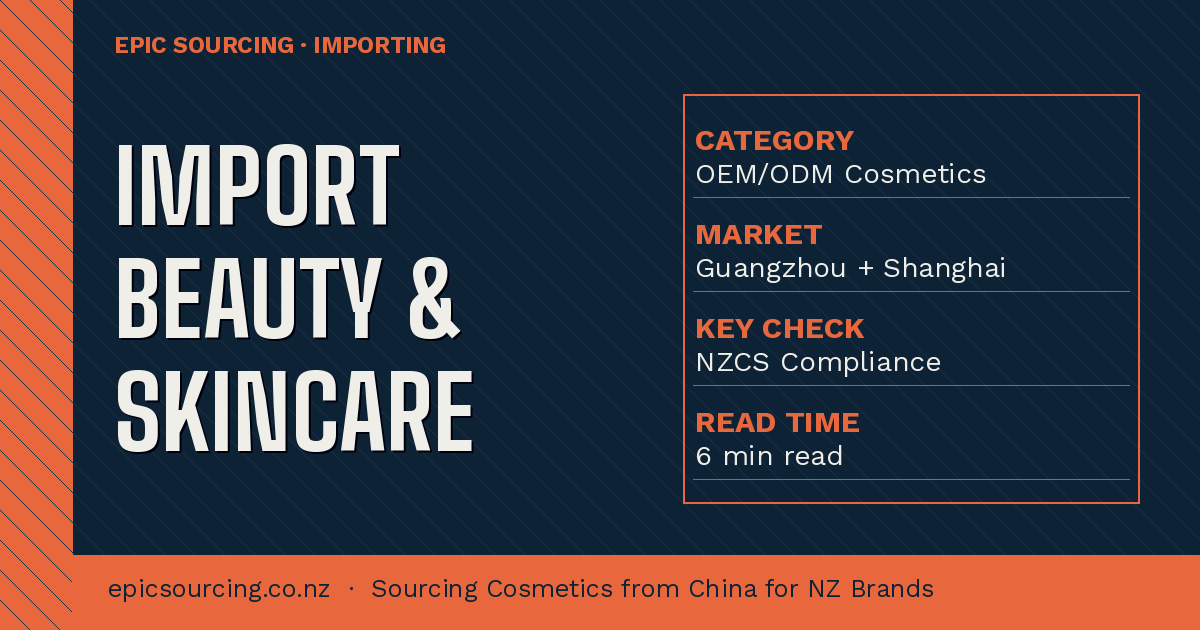
How to Import Beauty & Skincare Products from China for Your NZ Brand

.svg)
So, you want to launch a beauty brand. Maybe you've got a vision for a skincare line that sits beautifully on the shelves of NZ boutiques, or maybe you're building a direct-to-consumer brand that you'll sell through Instagram and your own Shopify store. Either way - good thinking. The NZ beauty market is growing, Kiwi consumers love locally branded products, and China is one of the best places in the world to source and manufacture beauty goods.
But let's not sugarcoat it (pun intended): importing beauty and skincare from China is one of the more complex sourcing categories. There are regulatory hoops to jump through, ingredient lists to scrutinise, and shelf-stability to think about. Done right, though, it can be incredibly rewarding and profitable.
Let's walk through exactly how to import beauty and skincare products from China for your NZ brand.
Why Source Beauty Products from China?
China has one of the world's most sophisticated cosmetics manufacturing sectors. Cities like Guangzhou are home to hundreds of OEM (original equipment manufacturer) and ODM (original design manufacturer) beauty factories - many of which supply major international brands under the radar.
The advantages are clear:
- Competitive pricing - a lipstick that costs $2-$4 to manufacture in China might retail for $20-$30 in NZ
- Huge product range - skincare, haircare, colour cosmetics, body care, fragrance, and more
- Private label options - many factories offer ready-to-brand formulations, so you don't need to develop a formula from scratch
- Low MOQs - smaller beauty brands can often get started with 200-500 units, making it accessible for NZ startups
Step 1: Decide on Your Product Type
Are you selling:
- Finished retail products - lipsticks, moisturisers, serums, shampoos ready to package and sell?
- Bulk formulations - raw skincare bases you'll blend and package yourself in NZ?
- Private label products - existing formulations that you brand as your own?
- Custom formulated products - unique recipes developed specifically for your brand?
Most NZ startups begin with private label (option 3) because it's the fastest and most affordable route to market. You pick a formulation the factory already makes, tweak the fragrance or a few ingredients, put your branding on it, and go. As your brand grows, you can invest in custom formulations that are truly unique.
Step 2: Know Your Regulatory Requirements
This is where a lot of aspiring beauty importers get caught out. NZ does not have a dedicated cosmetics regulator in the way that, say, the EU does - but you still have legal obligations.
Under NZ law, cosmetics are regulated by the Cosmetic Products Group Standard, administered through the Commerce Commission and MPI. Key requirements include:
- A full ingredient list (INCI names) on product packaging
- Products must not contain prohibited substances (there's a list maintained by the Ministry of Health)
- Products must be safe for consumer use - meaning your formulations must be tested and stable
- Labelling must be accurate and not make unsubstantiated therapeutic claims
For products that cross into therapeutic territory (e.g. 'reduces UV damage' or 'treats acne'), you may also need to consider Medsafe's requirements.
Sourcing Hack #1: Only Work with Factories That Provide Full MSDS and Ingredient Documentation
A reputable Chinese cosmetics manufacturer will provide you with a full Material Safety Data Sheet (MSDS) and complete INCI ingredient list for any product they offer. If a supplier is cagey about sharing this information, walk away. You need this documentation to sell in NZ, and any supplier who won't provide it is a red flag.
Step 3: Finding the Right Factory
Guangzhou is the beauty manufacturing capital of China, and a huge proportion of the world's cosmetics come from this city's sprawling factory districts. Here's how to find the right partner:
- Alibaba / 1688 - both platforms list cosmetics factories. Focus on suppliers with 'cosmetics export' experience and who explicitly mention GMP certification.
- Beauty industry trade shows - China Beauty Expo (held in Shanghai) and the Canton Fair's cosmetics section are excellent for direct supplier relationships.
- A sourcing agent with beauty industry experience - for a regulated product category like cosmetics, having someone on the ground who knows the difference between a compliant factory and a dodgy one is worth its weight in gold.
Look specifically for factories with GMP (Good Manufacturing Practice) certification, ISO 22716 certification (the international cosmetics GMP standard), and experience exporting to Australia, the EU, or the US.
Step 4: Request Samples and Test Them Properly
Do not skip the sampling stage. Ever. For beauty products, your sampling checklist should include:
- Sensory testing - smell, texture, colour, application feel
- Stability testing - leave the product in a warm environment for a few weeks to check it doesn't separate or change
- Patch testing - test on skin before selling to customers
- Packaging quality - does the pump work? Does the lid seal properly? Is the print quality good?
- Label accuracy - does the ingredient list match what the factory told you?
For anything being applied to skin or hair, we'd strongly recommend getting an independent lab to run a basic safety assessment - particularly if you're selling to sensitive-skin customers or making any kind of claims about skin benefits.
Sourcing Hack #2: Order Samples in Your Actual Packaging
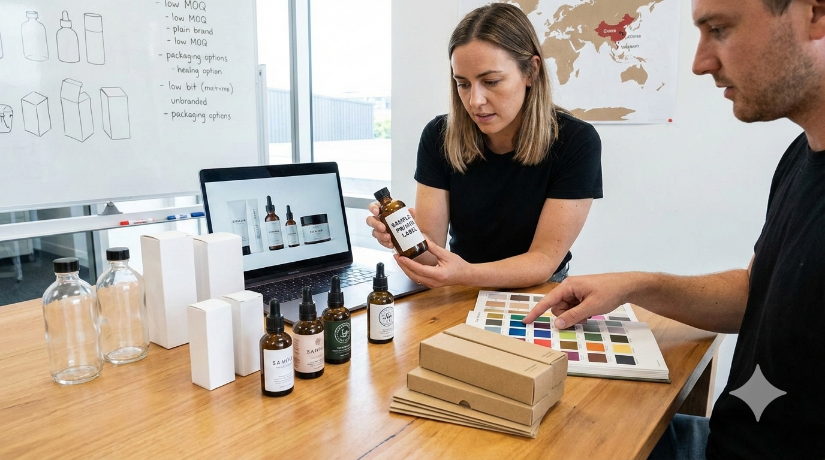
Many beauty brands make the mistake of testing the product formulation but not the packaging together. Colours can look different in different bottle materials. Fragrances can interact with certain packaging. Pumps can fail under temperature changes. Ask your supplier for samples in the exact packaging you intend to sell in, and test the whole assembled product - not just the formula.
Step 5: Nailing Your Branding and Packaging
Here's the thing about beauty: packaging is the product. NZ consumers buying a premium moisturiser expect premium packaging. If your bottle looks cheap or your labels peel, your brand is dead in the water - regardless of how good the formulation is.
The great news is that China also has a world-class packaging industry. You can source custom bottles, jars, tubes, and boxes - often from the same region as your manufacturer, which simplifies logistics. Many factories will even help you design and produce your packaging in-house.
Work with a graphic designer who understands retail packaging, ensure your artwork meets NZ labelling requirements, and don't cut corners on materials. Sustainable packaging (recycled plastics, glass, biodegradable materials) is increasingly important to NZ consumers - worth factoring in from day one.
The Bottom Line
Importing beauty and skincare products from China for your NZ brand is absolutely achievable - hundreds of Kiwi beauty brands are doing exactly this, right now. The key is treating compliance and quality as non-negotiables from the very beginning, not an afterthought.
Want help finding the right Chinese manufacturing partner for your beauty brand? Book a free consultation with Epic Sourcing NZ - we've sourced beauty products from factories across Guangzhou and beyond, and we'd love to help you build something brilliant.
Related Articles

Let’s Make It Epic
We're here to make sourcing simple – and a whole lot less stressful.
We are experiencing a higher volume of enquiries than usual. Our standard reply time for form submissions and emails is within 72 hours.
If your matter is urgent, please schedule a video call using the link below.
