.svg)
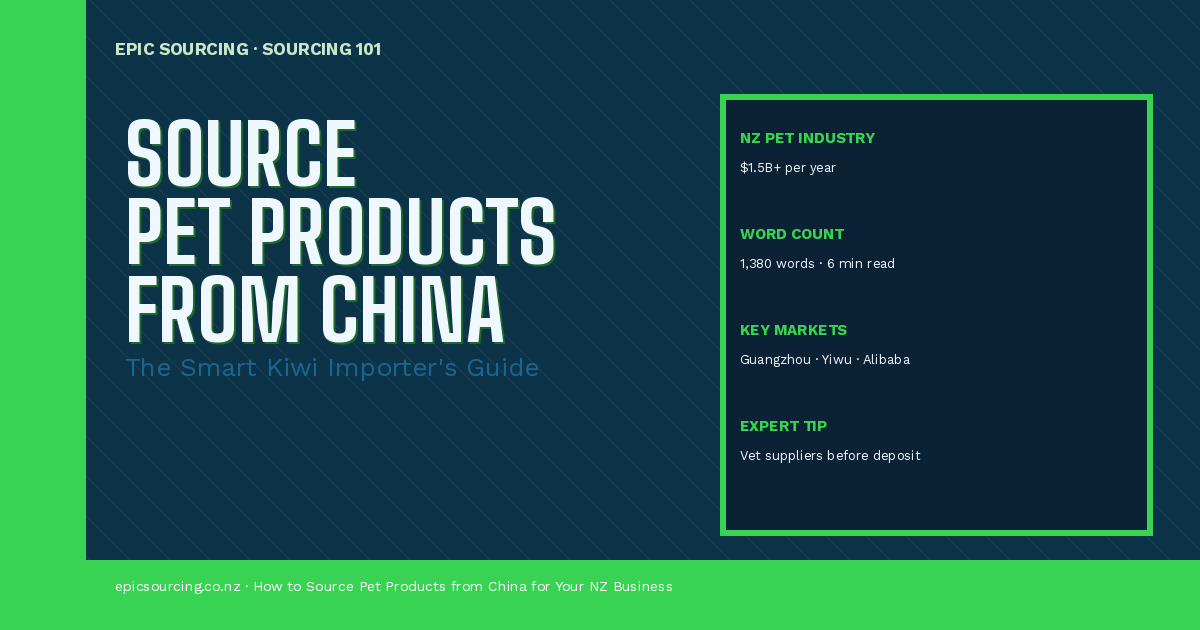
How to Source Pet Products from China for Your NZ Business

.svg)
Welcome back to the Epic Sourcing NZ blog — your go-to resource for all things importing, sourcing, and making your business run smoother with quality products from Asia.
Here's a fun fact: New Zealand's pet industry is booming. Kiwis spend well over $1.5 billion a year on their furry, feathered, and scaly companions, and that number keeps climbing. Whether it's organic dog treats, designer pet beds, or slow-feeder bowls, the demand for quality pet products is real — and so is the opportunity for smart NZ businesses to get ahead of it.
So if you've been thinking about sourcing pet products from China for your NZ store, eCommerce brand, or retail chain, you're in the right place. Let's dive into what you need to know to do it well.
Why China Is a Smart Source for Pet Products
China is the world's largest manufacturer of pet products — full stop. From Guangzhou's giant pet product factories to Yiwu's sprawling wholesale markets, there's an enormous range of quality, price point, and product type available.
For NZ businesses, this means you can source everything from branded pet beds and stainless steel food bowls to GPS pet trackers, customised pet apparel, and eco-friendly bamboo toys — often at a fraction of what you'd pay through a local distributor.
The key is knowing what to look for and how to vet your suppliers properly. China's manufacturing industry spans everything from cut-price commodity goods to genuinely premium, export-quality products. Your job is to find the right factories and build the right relationships.
What Pet Products Can You Source from China?
The range is honestly massive. Here's a snapshot of what NZ businesses are successfully importing:
- Pet food and treats — Dried meat treats, dental chews, freeze-dried raw snacks, training treats. Note: food products require specific MPI (Ministry for Primary Industries) approvals for import into NZ. More on that below.
- Pet beds and furniture — From basic foam mats to elevated orthopedic beds, cat trees, and dog crates. These are high-margin items and easy to private label.
- Collars, leads, and harnesses — One of the most popular categories. Custom colour, custom logo, custom packaging — all very achievable from China.
- Pet clothing and accessories — Jackets, booties, bandanas, and costumes. Strong seasonal demand, especially in the lead-up to Christmas.
- Toys and enrichment products — Squeaky toys, rope toys, puzzle feeders, slow-feeder bowls, lick mats. Great for eCommerce brands.
- Grooming tools — Slicker brushes, nail grinders, deshedding tools, shampoos (with label compliance).
- Tech and smart products — GPS collars, automatic feeders, pet cameras. Growing category with strong NZ demand.
Sourcing Hack #1: Start with Hard Goods, Not Food
If you're new to sourcing pet products, start with non-food items like beds, toys, collars, or grooming tools. These have simpler import compliance requirements compared to pet food, which needs MPI clearance. Once you've got your sourcing process dialled in, you can expand into treats and food products.
Understanding NZ Import Rules for Pet Products
This is where a lot of importers come unstuck — and it's really important to get your head around the rules before you place any orders.
For non-food pet products (beds, toys, collars, clothing, etc.): These are generally straightforward to import into NZ. You'll need to comply with NZ product safety standards, and if you're private labelling, ensure all labelling meets New Zealand requirements (English language, accurate materials descriptions, country of origin).
For pet food and treats: This is where things get more complex. Importing pet food into NZ requires compliance with the Agricultural Compounds and Veterinary Medicines (ACVM) Act, and some products require biosecurity clearance from MPI. Always check the MPI website or consult a customs broker before ordering food-category pet products.
For products containing animal materials (rawhide, real fur, feathers, wool): These may require biosecurity declarations and inspection on arrival. Work with your freight forwarder to understand what documentation you'll need.
The lesson here is: do your compliance homework before you fall in love with a product. It saves a lot of heartache and wasted money.
How to Find Reliable Pet Product Suppliers in China
- Start on Alibaba or Made-in-China.com — Search for your specific product category and filter for Trade Assurance suppliers, Verified Suppliers, and factories with at least 2–3 years on the platform.
- Check their export history — Reputable suppliers should be able to tell you which countries they already export to. A factory that exports to Australia, the EU, or the US is likely already meeting high product standards.
- Ask for certifications — Look for ISO 9001, CE marking (for electronic products), REACH compliance, or ASTM/EN71 toy safety certifications as appropriate.
- Request samples before any bulk order — Non-negotiable. Test the product yourself. Check materials, stitching, durability, smell, packaging quality.
- Communicate clearly about NZ requirements — Tell suppliers upfront that you're selling in New Zealand and ask whether their products meet your market's standards.
Sourcing Hack #2: Use Product Photos as a Quality Benchmark
When reviewing supplier listings, look at the detail photos — not just the hero shots. Zoom into stitching, hardware, labelling, and packaging. If a supplier's own product photos show poor finishing or inconsistent quality, that's what you'll receive at scale. Good factories are proud of their work and show it.
Private Label vs White Label Pet Products
White labelling means you take an existing product the factory already makes, add your brand name and logo, and sell it as your own. It's faster, cheaper to get started, and lower risk. Perfect if you want to test a new product category without committing to large volumes or custom development.
Private labelling means working with a factory to develop a product specifically to your specifications — custom materials, custom design, custom features. Think: a dog bed with your unique pattern, a particular density foam, and a removable washable cover in a colourway no competitor is using. Higher upfront cost and longer lead time, but you end up with a product nobody else has.
For most Kiwi businesses entering the pet market, we'd suggest starting with white label to validate demand, then moving toward private label once you've got sales data and repeat customers behind you.
Getting Your Pet Products Into NZ: Shipping and Duties
China to NZ freight options include sea freight (most cost-effective for large volumes — 20–45 day transit) and air freight (faster but expensive — best for samples, urgent restocks, or high-value items).
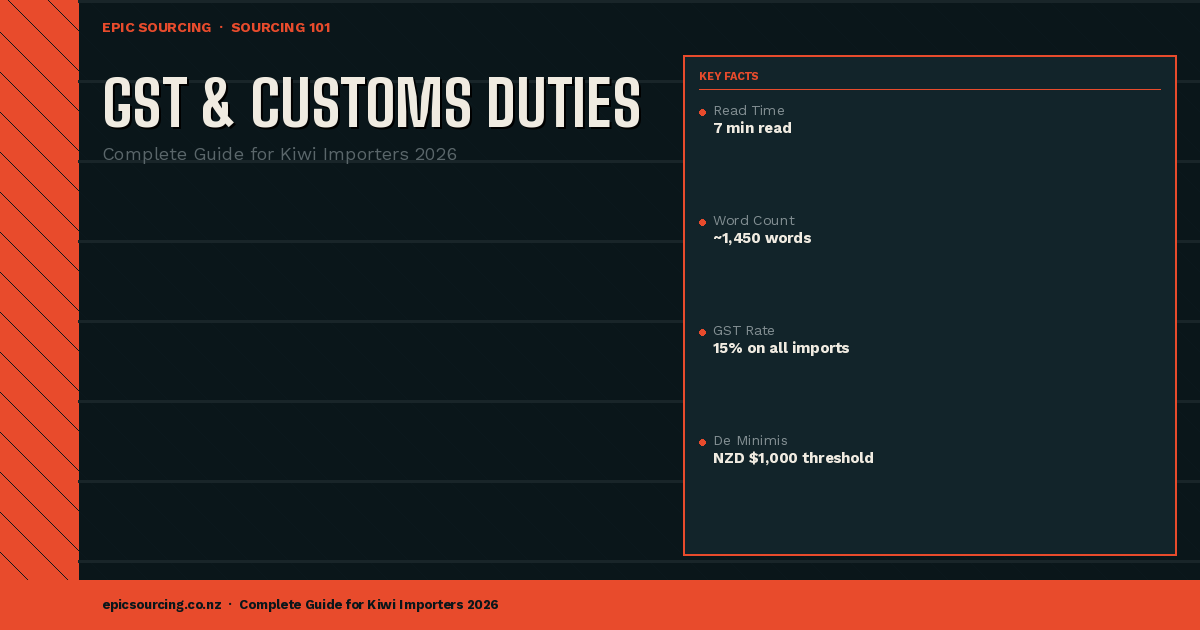
Most non-food pet products attract a 0% or 5% duty rate under the China-NZ Free Trade Agreement (FTA) — which is genuinely great news for your margins. GST (15%) applies on arrival for commercial imports above the de minimis threshold. Factor this into your landed cost calculations from day one.
Ready to Get Started?
Thinking about launching a pet product range but not sure where to start? That's exactly what Epic Sourcing is here for. We help NZ businesses find the right suppliers in China, manage quality control, and navigate the whole import process from first inquiry to products on your shelves. Book a free consultation with our team today — no strings attached, just genuine advice.
Related Articles


Let’s Make It Epic
We're here to make sourcing simple – and a whole lot less stressful.
We are experiencing a higher volume of enquiries than usual. Our standard reply time for form submissions and emails is within 72 hours.
If your matter is urgent, please schedule a video call using the link below.
