.svg)
How to Source Activewear and Sportswear for Your NZ Brand (Without Getting Burned)

.svg)
Why Activewear Is a Great Category to Source — And Why It's Tricky
Activewear is a high-volume, high-margin category when you get it right. China and Vietnam both have world-class textile manufacturing capabilities, and you can genuinely produce quality activewear at 30–50% of NZ retail prices at the factory level.
But here's the thing: activewear is also technically demanding. Unlike a water bottle or a tote bag, performance clothing has to do things — stretch, wick moisture, hold shape through hundreds of washes, and feel good against skin during high-intensity exercise. These performance attributes can't be judged from photos alone. They're all about fabric composition, GSM (grams per square metre), and construction quality.
The other challenge is sizing. Asian sizing charts often differ significantly from NZ/AU sizing, which means you either need to provide detailed technical specs upfront, or you'll end up with products that don't fit your customers.
Where Do Kiwi Brands Actually Source Activewear From?
The majority of quality activewear sold under NZ brands is sourced from one of three places:
- China (Guangzhou, Fujian, Yiwu) — The most common source; massive manufacturing ecosystem, competitive pricing, but quality varies widely by factory
- Vietnam (Ho Chi Minh City, Da Nang) — Increasingly popular for apparel; strong technical capability, slightly higher pricing than China, but ESG-compliance is often easier to demonstrate
- Taiwan — Known for premium technical fabrics; higher cost but excellent for performance categories
Sourcing Hack #1: Request Fabric Tech Sheets — Any serious activewear factory will have fabric tech sheets — documents that specify fabric composition (e.g. 82% polyester, 18% spandex), GSM weight, stretch percentage, and performance certifications. If a supplier can't provide these, move on. This single document will save you from 90% of fabric quality disasters.
The Activewear Sourcing Process — Step by Step
- Write your tech pack — A tech pack specifies every detail: fabric, colour codes (Pantone), stitching type, measurements in centimetres across all sizes, label placement, care instructions, and packaging requirements.
- Shortlist 3–5 factories — Use Alibaba, Made-in-China, or a sourcing agent. Look for verified manufacturers (not trading companies), Gold Supplier status, and factories with existing activewear portfolios.
- Request samples — Send your tech pack and request counter-samples. Budget NZD $200–$600 per sample set and 3–6 weeks for development.
- Test the samples hard — Literally wear them, wash them 20 times, stretch them, sweat in them. Look for colour fastness, seam strength, waistband recovery, and consistent sizing.
- Negotiate production pricing — Once you've approved a sample, request a pricing sheet for different MOQ tiers. Typical MOQs for activewear are 100–300 pieces per style per colour.
- Place a pilot order — Before going full production, run a pilot order to validate quality at scale. Sample quality and production quality can differ.
What MOQs and Lead Times Look Like in Reality
- Private label (existing designs with your branding): MOQ as low as 30–50 pieces per style. Production lead time: 3–5 weeks.
- Custom design (your original design, their factory): MOQ typically 100–300 pieces per style per colour. Production lead time: 6–10 weeks.
- Full cut-and-sew custom (from scratch): MOQ 300+ pieces, lead time 10–16 weeks.
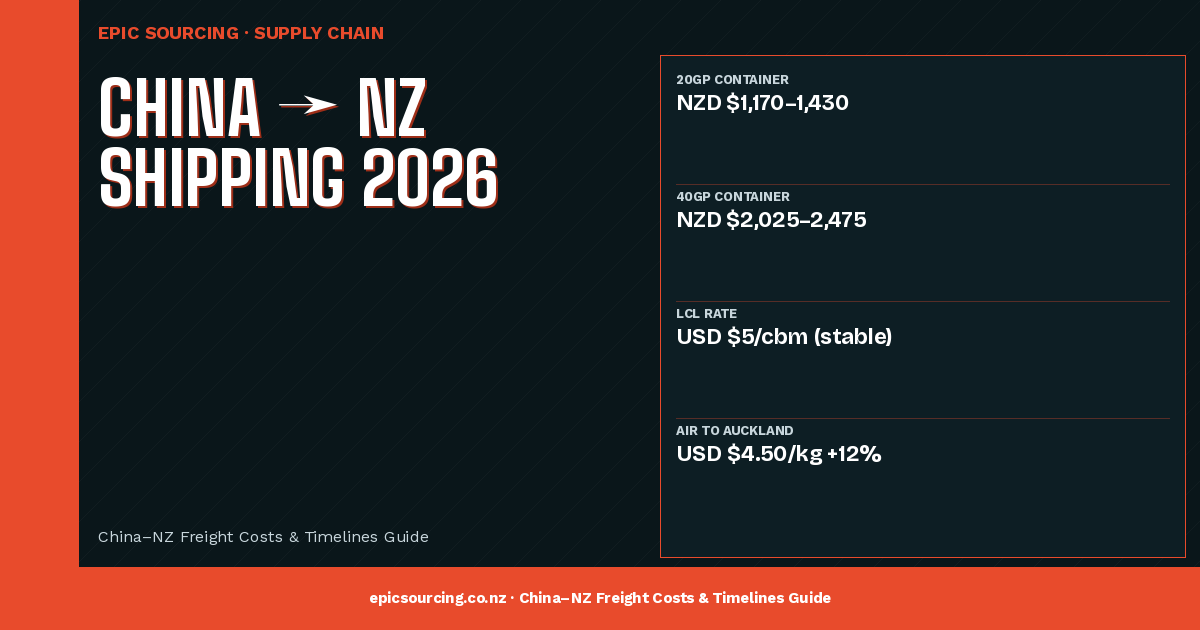
Add 3–5 weeks shipping time from China to NZ (sea freight), and you're looking at minimum 9–12 weeks from order to warehouse for a custom design. Plan accordingly, especially if you're targeting a seasonal launch.
Sourcing Hack #2: Order Size Breaks, Not Full Runs — When testing a new activewear style, order in size breaks — for example, 10 XS, 20 S, 30 M, 20 L, 10 XL — rather than equal quantities across all sizes. NZ fit data typically shows strong concentration in S–L. Ordering equal quantities wastes cash on sizes that won't sell.
Key Certifications for NZ Activewear Brands
- OEKO-TEX® STANDARD 100 — Certifies fabric has been tested for harmful substances. Increasingly expected by conscious consumers.
- WRAP (Worldwide Responsible Accredited Production) — Factory-level social compliance certification
- GRS (Global Recycled Standard) — For recycled polyester activewear, a growing trend
Common Activewear Sourcing Mistakes Kiwi Brands Make
- Ordering too many colours, too early — Start with 2–3 core colours max
- Ignoring size consistency — Request a full size run measurement spec and check every sample against it
- Choosing price over factory quality — Pay the extra 10–15% for a factory with a proven portfolio
- No clear reorder plan — Activewear has seasons. Know your reorder timeline before your first order ships
Related Articles

Let’s Make It Epic
We're here to make sourcing simple – and a whole lot less stressful.
We are experiencing a higher volume of enquiries than usual. Our standard reply time for form submissions and emails is within 72 hours.
If your matter is urgent, please schedule a video call using the link below.
