
.svg)
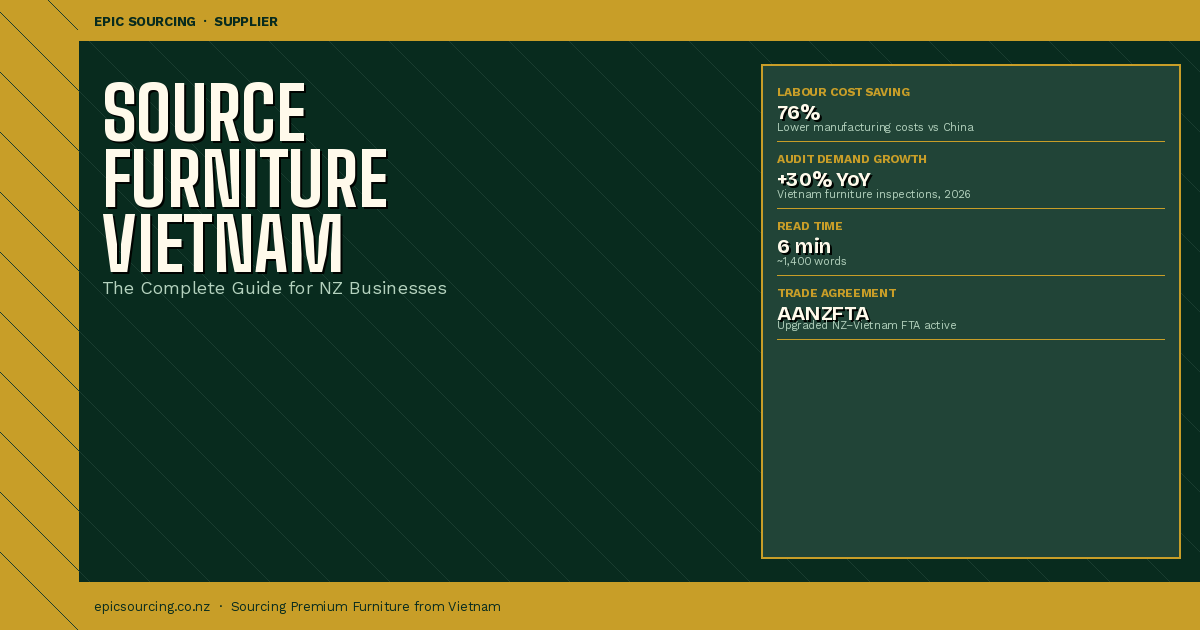
Sourcing Premium Furniture from Vietnam: The Complete Guide for NZ Businesses in 2026

.svg)
If you're in hospitality, property development, retail, or interior design, you already know the challenge: finding quality furniture that doesn't cost a fortune and actually arrives looking the way it did in the catalogue photo. It's harder than it sounds.
Vietnam has quietly become the answer for a growing number of NZ businesses. What was once primarily a Chinese-dominated furniture import market has shifted meaningfully, with Vietnam now handling significant volumes of mid-to-premium furniture for markets like Australia, New Zealand, the US, and Europe. Global inspection data shows demand for Vietnam furniture audits is up 30% year-on-year in 2026 — businesses aren't just dipping their toe in, they're committing.
This guide walks you through everything you need to know about sourcing furniture from Vietnam as a New Zealand business — from why it makes sense right now, to how to find the right suppliers, what the shipping looks like, and how to avoid the common pitfalls.
Why Vietnam for Furniture in 2026?
The case for Vietnam has never been stronger, and several factors are converging right now:
- Labour cost advantage — Vietnam's manufacturing labour costs are approximately 76% lower than China's. For furniture, which is labour-intensive, this translates directly into better pricing on handcrafted and custom pieces.
- Timber and natural material expertise — Vietnam has a long tradition of working with solid hardwoods, rattan, water hyacinth, bamboo, and natural fibres. The skill base for furniture making is genuinely exceptional.
- Sustainability credentials — Many Vietnamese furniture factories hold FSC (Forest Stewardship Council) certification for responsible timber sourcing, which is increasingly required by NZ retailers and hospitality operators.
- NZ-Vietnam Strategic Partnership — In February 2025, NZ and Vietnam upgraded their bilateral relationship to a Comprehensive Strategic Partnership, signalling deepening trade ties and better support for NZ businesses operating in Vietnam.
- AANZFTA upgrade — The ASEAN-Australia-New Zealand Free Trade Agreement's Second Protocol entered force in April 2025, streamlining tariff preferences and adding e-commerce provisions that make Vietnam–NZ trade more straightforward.
What Types of Furniture Can You Source from Vietnam?
Vietnam has genuine depth across several furniture categories. Here's where the country excels:
- Indoor solid timber furniture — dining tables, chairs, bed frames, sideboards, and shelving in oak, acacia, rubber wood, and teak. Quality comparable to European production at a fraction of the cost.
- Rattan, wicker, and natural weave — lounge chairs, outdoor furniture, hanging chairs, and decor items. Vietnam is one of the world's leading producers of rattan furniture.
- Hotel and hospitality FF&E — custom headboards, bedside tables, lobby furniture, restaurant seating. Many Vietnam factories have experience with international hotel group specifications.
- Upholstered furniture — sofas, dining chairs, ottomans. Quality of foam, fabric, and stitching has improved significantly over the last five years.
- Outdoor furniture — teak garden settings, aluminium-frame outdoor dining, and natural fibre outdoor chairs. Strong category given NZ's outdoor living culture.
Sourcing Hack #1: Use Category Specialisation to Filter Suppliers — When searching for Vietnam furniture manufacturers, don't just search generically. Search by material — 'rattan furniture manufacturer Vietnam', 'FSC teak furniture Vietnam', 'solid acacia furniture factory Ho Chi Minh'. Factories that specialise in one material category almost always produce better quality than those trying to do everything. Specialisation is your quality signal.
How to Find Reputable Vietnam Furniture Suppliers
There are several routes to finding vetted Vietnam furniture manufacturers as a NZ business:
- Trade platforms — Alibaba and Made-in-China both list Vietnamese furniture manufacturers. The key filter: look for factories with independent third-party audit certificates (BSCI, SA8000, FSC), not just platform verification.
- Industry trade shows — Vietnam EXPO and HawaExpo (Vietnam Wood & Home Furnishings Show) are the two major exhibitions. Attending even once establishes direct factory relationships that deliver better pricing and priority treatment.
- Sourcing agents based in Vietnam — a good in-country agent gives you access to factories not listed on any international platform, plus someone who speaks the language and understands the local business culture.
- Factory audits via QIMA or Bureau Veritas — before committing to a significant order, commissioning a third-party social compliance and quality management audit (typically USD $300–500) gives you an objective view of a factory's capabilities.
- Referrals from other NZ importers — the NZ importing community is smaller than you'd think. Connecting with other businesses who've sourced from Vietnam often yields the best supplier introductions.
Sourcing Hack #2: Request a Sample Shipment via Air Freight First — Before placing your first container order, request samples via air freight. Yes, air freight sample costs add up — but a USD $200–400 air freight sample that prevents a USD $15,000 mistake on a full container is the best investment you'll make. Examine the sample for joinery quality, finish consistency, material sourcing, and packaging. If the sample ships well, you can be confident the bulk order will too.
Freight and Logistics: Vietnam to New Zealand
Here's a practical overview of the Vietnam–NZ shipping picture in July 2026:
- Sea freight FCL (40GP) Vietnam to Auckland: approximately USD $1,800–$2,800 depending on port of origin and current market conditions
- Sea freight LCL: approximately USD $40–55/cbm Vietnam to Auckland
- Transit time: 18–25 days FCL depending on routing (direct vs transhipment via Singapore)
- Air freight: USD $4.50–6.00/kg — viable for small high-value pieces or urgent samples
One thing to plan for: Vietnamese furniture factories typically have longer lead times than China for custom pieces — expect 45–90 days production time for custom or semi-custom work, versus 20–45 days for more standard products. Factor this into your planning, especially if you're stocking for a seasonal product launch.
Common Pitfalls and How to Avoid Them
A few things trip up NZ businesses importing furniture from Vietnam for the first time:
- Underestimating lead times — Vietnam custom furniture isn't a quick turnaround. Build in buffer time and communicate your deadline clearly from day one.
- Not specifying enough on finish — 'walnut stain' means different things to different factories. Always request a physical colour swatch or finish sample before approving production.
- Skipping QC inspection — with furniture especially, a pre-shipment inspection is not optional. Damage or quality issues discovered post-arrival are expensive to resolve. Spend USD $300 on QC before the container loads.
- Ignoring timber certification requirements — if you're supplying to commercial hospitality operators or retailers, they may require FSC certification. Confirm upfront whether your factory holds it.
- Using FOB pricing without understanding NZ customs — ensure you understand the landed cost calculation including NZ customs duty rates for furniture (most are 0–5% under AANZFTA) and GST obligations.
Sourcing Hack #3: Film Your QC Inspection — Ask your QC inspector or agent to film key parts of the pre-shipment inspection — particularly joinery, drawer mechanisms, finish quality, and packaging. Share this with your client or stakeholder before shipment approves. For hospitality FF&E especially, having video documentation of pre-shipment quality protects you if disputes arise later.
Ready to take the next step? Book a free consultation with the team at Epic Sourcing — we have established contacts with quality-verified furniture manufacturers across Vietnam and can help you find the right factory for your specific product requirements. No obligation, just straight-up sourcing advice from people who do this every day.
Related Articles

Let’s Make It Epic
We're here to make sourcing simple – and a whole lot less stressful.
We are experiencing a higher volume of enquiries than usual. Our standard reply time for form submissions and emails is within 72 hours.
If your matter is urgent, please schedule a video call using the link below.
