
.svg)
How to Source Hotel Furniture and FF&E from China: A Complete Guide for NZ Hospitality Businesses

.svg)
Opening or refurbishing a hotel, motel, lodge, or resort in New Zealand? Then you already know the single biggest budget line item after construction itself: FF&E. Furniture, Fixtures and Equipment. Beds, mattresses, wardrobes, desks, chairs, bathroom vanities, lobby seating, restaurant tables — it adds up faster than you'd think.
Here's the thing most hospitality operators discover too late: the same quality FF&E you'd buy from a New Zealand wholesaler can often be sourced direct from Chinese manufacturers at 30–60% less. Same factories, in many cases. Just different distribution channels.
This guide walks you through exactly how to source hotel FF&E from China, what to watch out for, and how to make sure your rooms look great on opening night — not three months after it.
What Is Hotel FF&E and Why Does It Matter for Sourcing?
FF&E stands for Furniture, Fixtures, and Equipment — the movable items that furnish and outfit a hospitality property. For a typical NZ hotel or motel project, FF&E might include:
- Guest room furniture: beds, bedheads, bedside tables, wardrobes, TV units, chairs, desks
- Bathroom fixtures: vanity units, mirror cabinets, towel rails, accessory sets
- Lobby and common areas: reception desks, sofas, armchairs, coffee tables, lighting
- Restaurant and bar furniture: dining chairs, tables, bar stools, banquette seating
- Outdoor furniture: pool loungers, outdoor dining sets, umbrellas
The sheer volume — multiply your room count by the number of items per room — is what makes direct sourcing from China so compelling for hospitality projects.
Finding the Right Factories in China
China has dedicated furniture and hospitality manufacturing clusters, particularly in:
- Foshan (Guangdong province): NZ's main furniture sourcing hub. Specialises in residential and commercial furniture, with hundreds of factories producing hotel-grade product.
- Shunde (within the Foshan metro area): Known for high-quality upholstered furniture, sofas, and lounge chairs.
- Shenzhen: Good for custom joinery, reception desks, and higher-end commercial fitout.
- Dongguan: Strong in outdoor furniture, restaurant seating, and rattan/wicker products.
The challenge isn't finding factories — a quick Alibaba search returns hundreds. The challenge is identifying which ones actually produce hotel-grade quality versus residential-grade product that looks similar online but won't survive commercial use.
Sourcing Hack #1: Request Hotel References Specifically — When approaching Chinese furniture factories, always ask: 'Do you supply to hotels or commercial hospitality projects?' Request photos of completed hotel installations, not just product shots. Factories with real hospitality experience will have project portfolios. Those without will hedge.
Key Quality Standards for Hotel FF&E
Hotel furniture takes a beating. Before placing any order, ensure your factory can meet these standards:
- Frame construction: Solid timber or heavy-gauge metal frames (not MDF or particleboard for load-bearing components). Ask for frame construction photos.
- Joinery quality: Dovetail or mortise-and-tenon joints in timber pieces. Avoid stapled construction for anything that will take weight.
- Fabric durability: Commercial-grade fabrics rated to 50,000+ Martindale rubs for upholstered pieces. Request Martindale rub test certificates.
- Finish durability: Ask about the lacquer or coating process. Multi-coat processes with UV curing are more durable for commercial use.
- Fire retardancy: NZ building regulations may require FR-rated materials for certain hospitality applications. Confirm this with your fire engineer early.
- Hardware quality: Soft-close drawer runners, solid metal hinges. These are the components that fail first in cheap furniture.
Sampling and Customisation: Getting It Right Before the Container Ships
One of the biggest mistakes hospitality operators make with Chinese FF&E is ordering containers without proper samples. A proper FF&E sampling process works like this:
- Brief the factory: Provide detailed specifications including dimensions, materials, fabric swatches, finish options, and hardware preferences.
- Request a physical sample: Not product photos — a physical sample of the actual product you'll order. Budget 2–4 weeks for production and 1–2 weeks for freight.
- Inspect against spec: When the sample arrives, check every detail against your brief: dimensions, finish quality, joinery, hardware, fabric quality, and overall aesthetic.
- Approve with sign-off: Create a formal approval document referencing the sample with photos. This becomes the quality benchmark for your production order.
- Pre-shipment inspection: Before your container ships, have an independent inspection agent verify that production matches the approved sample.
Sourcing Hack #2: Build in a 10% Replacement Budget — Even with the best QC process, hospitality FF&E projects almost always see some pieces arrive with damage or defects. Budget for a 5–10% replacement cushion — it's far cheaper to factor this in upfront than to scramble for replacements after opening.
Lead Times, Shipping, and Installation Planning
FF&E projects require careful timeline planning. Here's a realistic timeline for a NZ hotel FF&E project sourced from China:
- Factory selection and quoting: 2–4 weeks
- Sample production and approval: 4–8 weeks
- Production: 6–12 weeks (depending on volume and complexity)
- Pre-shipment inspection: 1 week
- Sea freight to Auckland: 20–23 days
- Customs clearance and delivery: 1–2 weeks
Total from order confirmation to NZ delivery: typically 16–24 weeks. If you're working to a hotel opening date, plan backwards from that date and add buffer. FF&E delays are one of the most common causes of hotel opening delays.
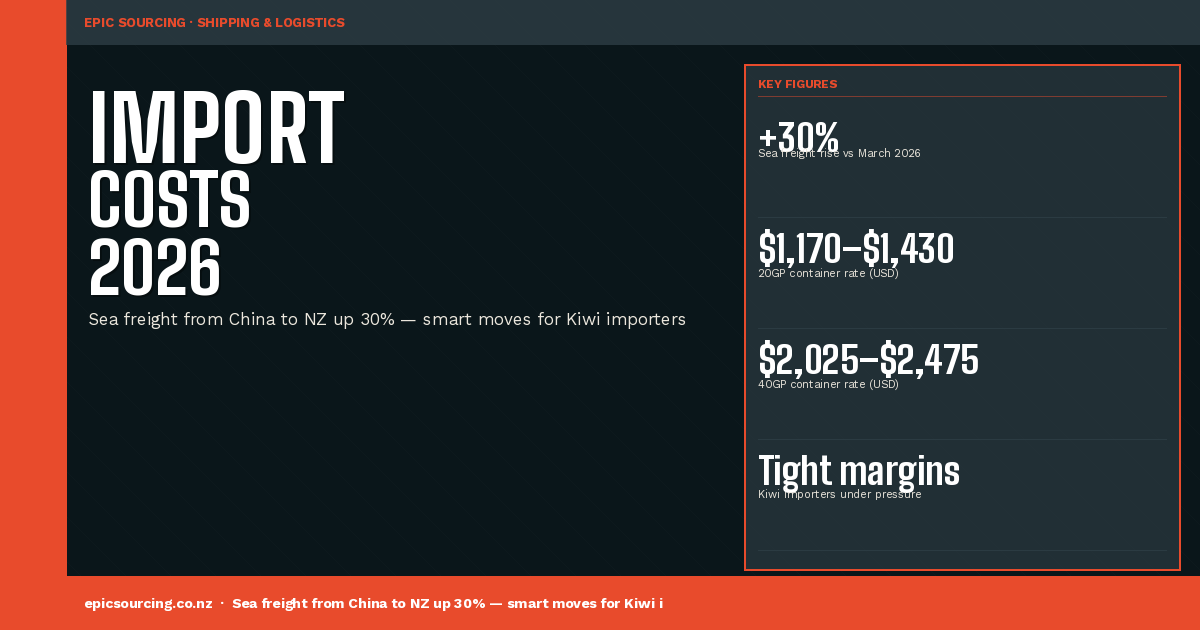
Current FCL freight rates from China to Auckland are running USD $1,890–$2,310 for a 20GP container and USD $3,735–$4,565 for a 40GP. For large FF&E projects, a 40GP container is typically the most cost-effective option.
Why Work with a Sourcing Agent for Hotel FF&E?
FF&E sourcing is one of the most complex sourcing projects a NZ business can undertake. You're managing multiple factory relationships, coordinating samples and approvals, arranging inspections, and orchestrating a freight and logistics plan — often while simultaneously managing the construction project itself.
A sourcing agent with hospitality experience handles the factory-side complexity so you can focus on the opening. They know which Foshan factories produce hotel-grade work versus residential quality, they speak the language, and they can be on the factory floor when your production is running. For projects of any significant scale, the agent fee is typically recovered many times over in avoided mistakes, better pricing through supplier relationships, and smoother logistics.
Ready to get started? Book a free consultation with the Epic Sourcing team at epicsourcing.co.nz — no obligation, just a straight-talking conversation about your FF&E project and how we can help.
Related Articles


Let’s Make It Epic
We're here to make sourcing simple – and a whole lot less stressful.
We are experiencing a higher volume of enquiries than usual. Our standard reply time for form submissions and emails is within 72 hours.
If your matter is urgent, please schedule a video call using the link below.
