.svg)
Why NZ Hasn't Added Tariffs on Chinese Goods — And What It Means for Kiwi Importers

.svg)
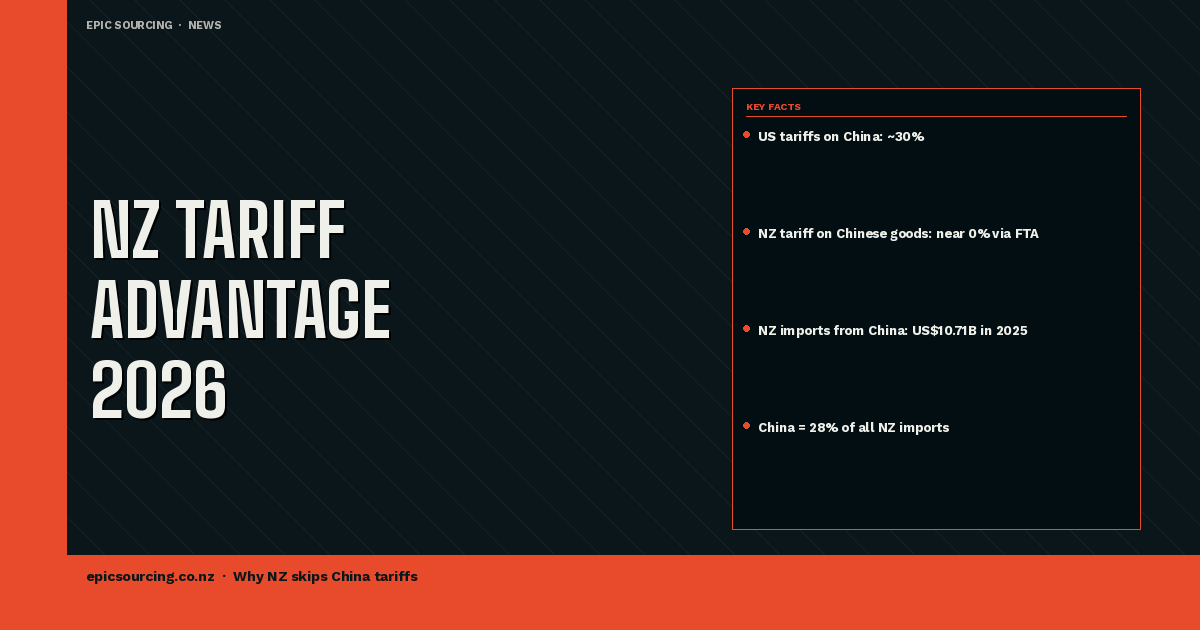
If you've been keeping an eye on global trade news lately, you'll have noticed a lot of noise about tariffs. The US has slapped an eye-watering ~30% tariff rate on Chinese goods, sending ripples through supply chains worldwide. Boardrooms are panicking. Freight rates are jumping. And importers everywhere are scrambling to figure out their next move.
But here's the good news for Kiwi businesses: New Zealand hasn't followed suit. Not even close. While Washington and Beijing play their ongoing game of economic chess, NZ's tariff rates on Chinese goods remain unchanged — and that's a genuinely big deal if you're importing products for your business.
So, let's break down exactly what's happening, why NZ is in a relatively sweet spot, and how you can make the most of it. Whether you're importing bamboo furniture, activewear, or industrial equipment — this one's worth reading.
The US-China Trade War: A Quick Refresher
The US-China tariff saga has been going on for years, but 2025-2026 saw things escalate significantly. US tariffs on Chinese manufactured goods now sit at around 30% — meaning American importers are paying roughly a third more just to get products across the border. For context, that's the kind of cost that can wipe out your margins faster than you can say 'minimum order quantity.'
The knock-on effects are real. American businesses are desperately hunting for alternatives — hence the explosion of interest in Vietnam, India, and Mexico as sourcing destinations. Global container shipping rates have also climbed as manufacturers scramble to reroute supply chains. Here's the thing though: this is America's problem, not ours. New Zealand has its own trade relationship with China, and it looks quite different.
NZ and China: A Surprisingly Strong Trade Partnership
China is New Zealand's most important trading partner, full stop. In 2025, NZ imported US$10.71 billion worth of goods from China — that's roughly 28% of all our imports coming from one country. Everything from machinery and electronics to clothing, homeware, and industrial equipment.
Unlike the US, NZ has a free trade agreement with China (signed back in 2008, making us the first developed nation to do so). This means most NZ importers already enjoy lower-than-average tariff rates on Chinese goods. And critically, the current trade environment hasn't prompted Wellington to add new tariffs or trade restrictions. This matters because it keeps your landed cost of goods stable and predictable — two things that are genuinely hard to come by in today's global market.
Sourcing Hack #1: Use NZ Trade Position as a Competitive Advantage
→ If you're competing against US-based brands in global markets, your cost base is structurally lower right now.
→ When calculating landed costs, factor in that NZ tariffs on most Chinese manufactured goods are 0–5%.
→ Use the tariff-free window to build inventory while your US competitors are squeezed.
What's Actually Changing: Indirect Pressure on Shipping
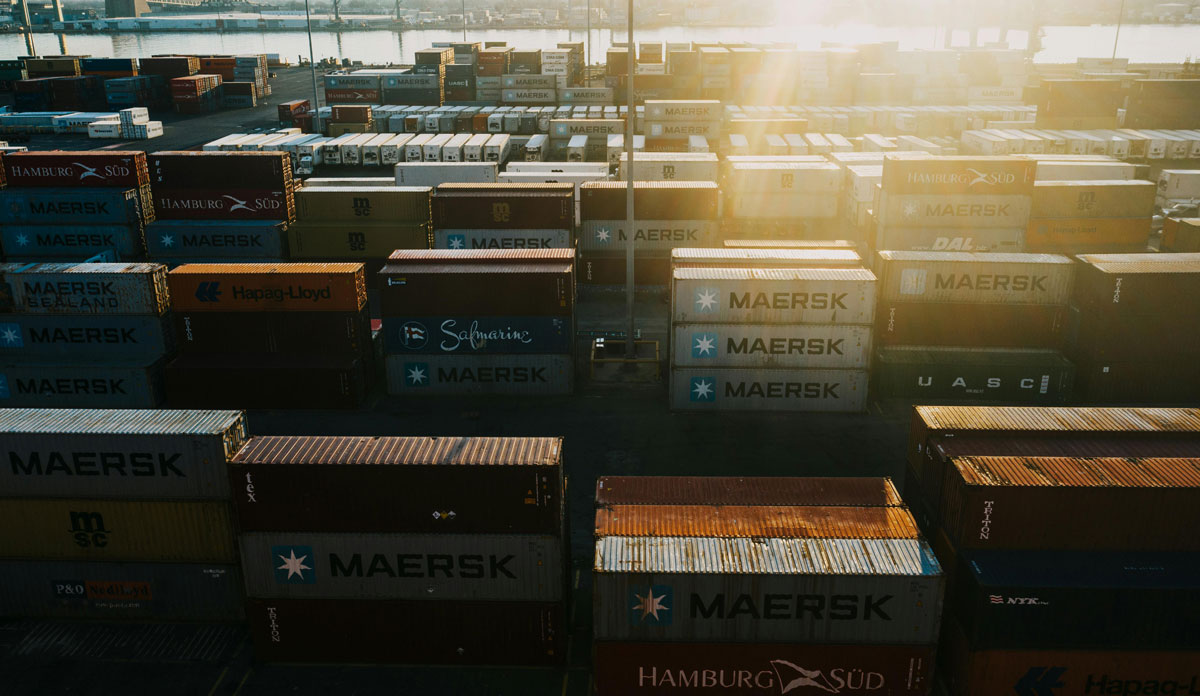
Just because NZ hasn't added tariffs doesn't mean you're completely insulated from the global situation. The indirect effects are real, and the biggest one is freight rates. As of April 2026, shipping a standard 20-foot container from China to NZ is running between $1,170 and $1,430 — up about 30% since March. A 40-foot container is fetching $2,025 to $2,475. Air freight to Auckland has also climbed to around $4.50/kg, up 12%.
Why? Because when global supply chains shift — factories switching to new routes, American importers redirecting containers, port congestion in alternative markets — it creates ripple effects across the entire freight network. NZ isn't immune, even if our tariffs are fine. The practical upshot: plan your orders further in advance than you used to. Last-minute bookings are getting harder to secure, and the premium for urgency is climbing.
The China Plus One Trend and Whether It Applies to You
One of the big global responses to the tariff environment is something called the 'China Plus One' strategy. The idea is simple: keep sourcing from China, but also develop a second sourcing option — usually Vietnam, India, or Thailand — to reduce single-country dependency.
The honest assessment for most NZ businesses? China still makes sense as your primary source. The cost advantage, manufacturing capability, and sheer range of products available from Chinese factories is hard to replicate anywhere else right now. That said, if you're in clothing, furniture, or homewares — it's worth at least understanding what Vietnam can offer.
Sourcing Hack #2: Audit Your Supply Chain for Single-Source Risk
→ List every product you import and ask: what happens if this factory can't deliver for 3 months?
→ Identify your top 2–3 products by revenue and find at least one backup supplier, even if you never use them.
→ For orders over NZ$50K, consider splitting volume between two factories to reduce risk.
How to Position Your Business for the Rest of 2026
Here's the practical takeaway: the global tariff environment is creating turbulence, but NZ importers are in a genuinely better position than most. The key moves for the next six months:
- Lock in orders early. Freight capacity gets tighter closer to Christmas.
- Get your supplier relationships solid. In uncertain times, long-term suppliers will prioritise their reliable clients.
- Consider LCL shipping for smaller orders. At $5/cbm, Less-than-Container Load is holding steady.
- Review your landed cost calculations. If your spreadsheet hasn't been updated since early 2025, your margins might look healthier on paper than in reality.
- Explore Vietnam for specific categories. You don't have to abandon China — just know when Vietnam genuinely makes more sense.
The businesses that will thrive over the next 12 months aren't the ones panicking about tariffs — they're the ones who understand the landscape clearly and move confidently within it.
Want help navigating the current import environment? The team at Epic Sourcing offers a free consultation where we can look at your specific product category, review your supply chain, and help you make smart sourcing decisions. Book your free chat at epicsourcing.co.nz — no pressure, just good intel.
Related Articles


Let’s Make It Epic
We're here to make sourcing simple – and a whole lot less stressful.
We are experiencing a higher volume of enquiries than usual. Our standard reply time for form submissions and emails is within 72 hours.
If your matter is urgent, please schedule a video call using the link below.
