
.svg)

NZ Shipping Costs Are Up 30% — What Kiwi Importers Need to Know Right Now

.svg)
If you've been importing from China or Vietnam lately, you may have noticed something a little alarming in your freight quotes. Shipping rates are up — and not by a small amount. We're talking 15–30% increases on sea freight, a brand new NZ Customs levy that kicked in on 1 April 2026, and lead times stretching out to 6+ weeks. That's a lot happening all at once, and we reckon Kiwi importers deserve a proper breakdown.
So, whether you're ordering activewear from Guangzhou, bamboo homewares from Hangzhou, or hotel furniture from Foshan — this one's for you. Let's dive into what's going on with freight rates, why it's happening, and (more importantly) what you can do about it.
What's Actually Happening With Freight Rates Right Now?
Here's the current state of play as of April 2026:
- Sea freight — 20ft container (China to NZ): NZD $1,170–$1,430 (up ~30% vs March 2025)
- Sea freight — 40ft container (China to NZ): NZD $2,025–$2,475 (up ~15% vs March 2025)
- Air freight: $4.50/kg (up ~12%)
- Express shipping: $7.55/kg (up ~12%)
These are significant jumps, especially on the 20ft container side. If you've been running margin calculations based on last year's freight costs, it's time for a refresh.
Why Are Rates Spiking? The Short Version
There are a few things conspiring at once here. First, there's the Middle East conflict factor — ongoing disruption around the Strait of Hormuz is forcing vessels to reroute, which adds time and cost. Second, fuel surcharges are accelerating across ocean freight and domestic cartage. Think of it like the cost of everything going up because diesel is dearer.
Extended loading queues at Asian ports are also playing a role. Ships aren't moving as smoothly through the system, so what used to take 4 weeks is now averaging 6+ weeks from Asia to New Zealand. That's a two-week blow-out that can wreak havoc on your inventory planning if you're not prepared for it.
And then there's the US tariff effect. With American tariffs on Chinese goods sitting at roughly 30%, there's been a surge in businesses rerouting shipments and competing for cargo space — tightening capacity across the board.
The New NZ Customs Goods Management Levy — What Is It?
Here's something that snuck up on a lot of importers: as of 1 April 2026, NZ Customs introduced a new Goods Management Levy on imports. If your shipment is valued at NZD $1,000 or more, you'll now cop an additional NZD $2–3 processing charge (plus GST) per entry.
It's not a massive amount on any single shipment, but for businesses running multiple container imports per month — like hospitality operators sourcing hotel furniture from Foshan every month — it adds up over a year. Factor this into your landed cost calculations from here on out.
Sourcing Hack #1: Build Your Full Landed Cost Sheet Before You Order — Don't just get a product quote from your supplier. Always calculate: product cost + sea freight + insurance + NZ Customs duties + the new Goods Management Levy + GST + domestic delivery. A good landed cost spreadsheet will save you from nasty surprises at the border.
Extended Lead Times: The 6-Week Reality
Here's the thing that's catching a lot of importers off guard right now: lead times have blown out. What used to be a 4-week transit from China is now averaging 6+ weeks. And that's just transit time — add in production lead time from your factory (typically 3–6 weeks for most categories), and you're looking at 9–12 weeks from order to delivery on a good day.
For seasonal products — think summer activewear, outdoor furniture, Christmas gifts — that timeline shift can be the difference between stocking your shelves in time and missing the boat entirely. (Pun intended.)
The lesson here is simple: if you haven't already, you need to start ordering earlier. Like, much earlier. Businesses that are ordering 3–4 months ahead are sleeping just fine. Businesses ordering 6 weeks out are sweating.
Sourcing Hack #2: Add a 2-Week Buffer to Every Order — Until freight markets stabilise, add at least 2 extra weeks to your expected transit time for any Asia shipment. Better to have your stock arrive early and sit in your warehouse than to run out mid-campaign because a vessel got delayed off the coast of Oman.
How to Protect Your Margins in a High-Freight Environment
Rising shipping costs don't have to crater your margins — but you do need a strategy. Here are some approaches we're recommending to our clients right now:
- Consolidate your orders: Instead of placing multiple small orders, consolidate into fewer, larger shipments to maximise your container capacity and spread the fixed freight cost across more units.
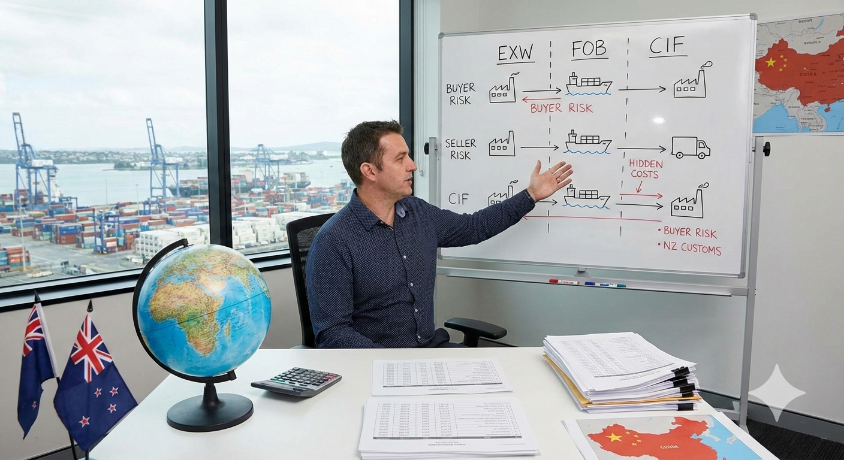
- Negotiate on FOB terms: Make sure you understand whether your supplier is quoting ex-works (EXW) or free on board (FOB). FOB means the supplier handles freight to the port — which gives you more control over the ocean leg.
- Consider air freight for high-value, low-weight products: If your product has a high value-to-weight ratio (like electronics, jewellery, or cosmetics), air freight can sometimes make sense — especially to avoid lost sales from a stockout.
- Get multiple freight quotes: Rates vary significantly between freight brokers. Don't just go with the first forwarder you find on Google.
- Review your pricing: If you haven't updated your retail pricing since last year, now might be the time. A 15–30% increase in freight costs is material — it's okay to pass some of that through, especially if your competitors are facing the same pressures.
Consolidating Into Vietnam: A Silver Lining
One thing worth mentioning: if you're already thinking about diversifying your sourcing away from China, Vietnam is increasingly looking like a smart move. Freight rates from Vietnam to NZ are competitive, and Vietnam benefits from preferential tariff arrangements under various trade agreements that China simply doesn't have access to.
If you'd like help reviewing your import costs or planning your next order, the team at Epic Sourcing NZ offers a free initial consultation. We're based here in New Zealand and we know this market inside out — book your free consultation today.
Related Articles

Let’s Make It Epic
We're here to make sourcing simple – and a whole lot less stressful.
We are experiencing a higher volume of enquiries than usual. Our standard reply time for form submissions and emails is within 72 hours.
If your matter is urgent, please schedule a video call using the link below.
